Caring for Patients Beyond the Limits of the System: A Surgeon's Reality in Kano, Nigeria
In the latest installment of Voices of Global Surgery, Dr. Maryam, a consultant obstetrician and gynecologist in Kano, Nigeria, opens up about the terrifying, chaotic moment early in her career that forever changed how she communicates with her patients.
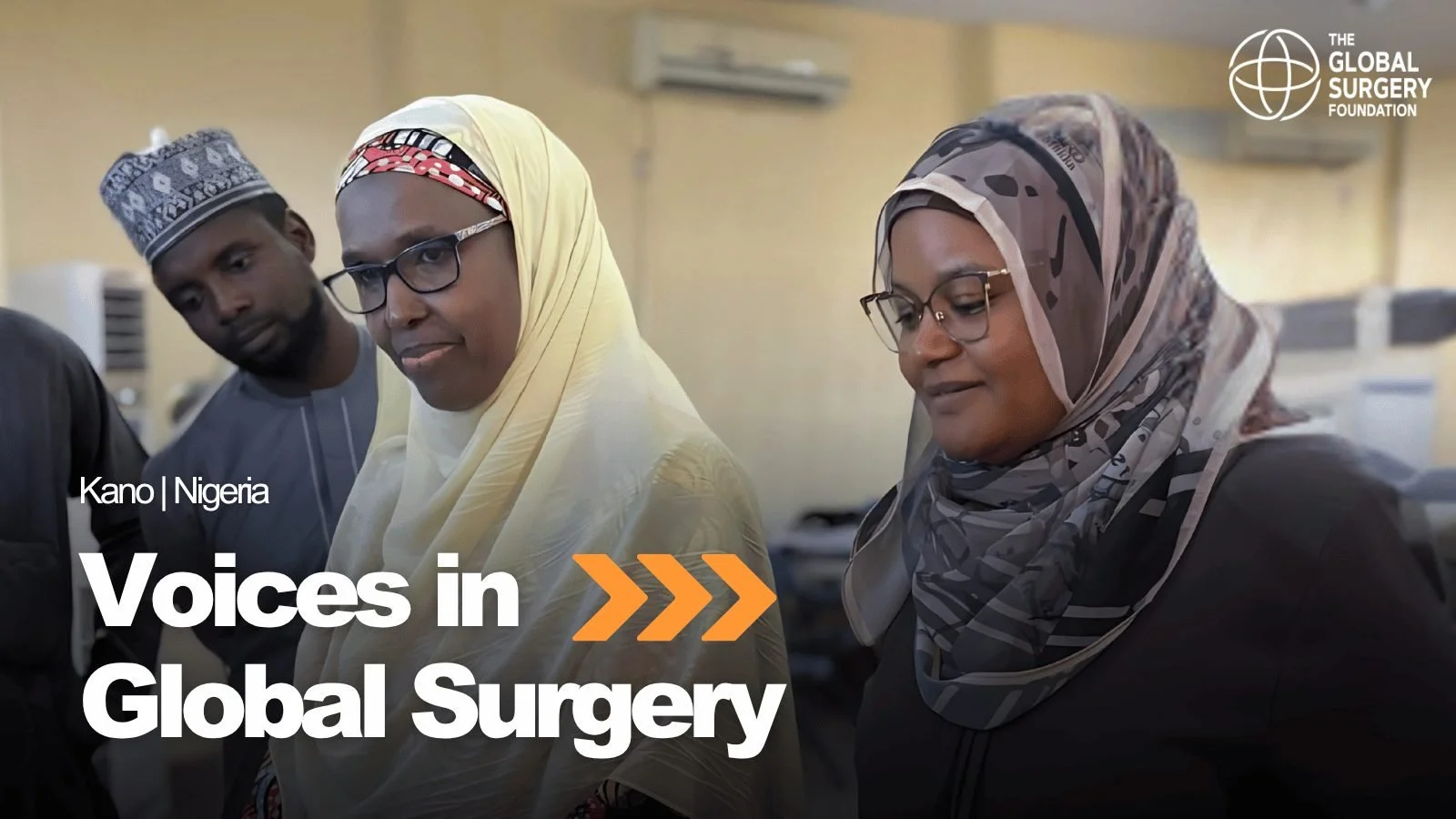
'We see each other like siblings.' Dr. Maryam (far right) and her colleagues in Kano, Nigeria, rely on deep trust and teamwork to navigate the daily unpredictability of obstetric care.
Kano, Nigeria — On some days, Dr. Maryam begins her morning in a quiet outpatient clinic. On others, she finds herself rushing into an emergency within minutes—no warning, no transition, just urgency.
“My work is quite unpredictable,” she says.
As a consultant obstetrician and gynecologist at Muhammad Abdullahi Wase Teaching Hospital in Kano, Nigeria, unpredictability is not an exception—it is the rhythm of her work. It was not always the plan. Obstetrics and gynecology was not her first choice. But during her rotations, something about the field stayed with her—the intensity, the pace, the immediacy of impact.
“You see results instantly… you know whether you’re winning or losing immediately.”
Years later, that same immediacy still defines her practice.
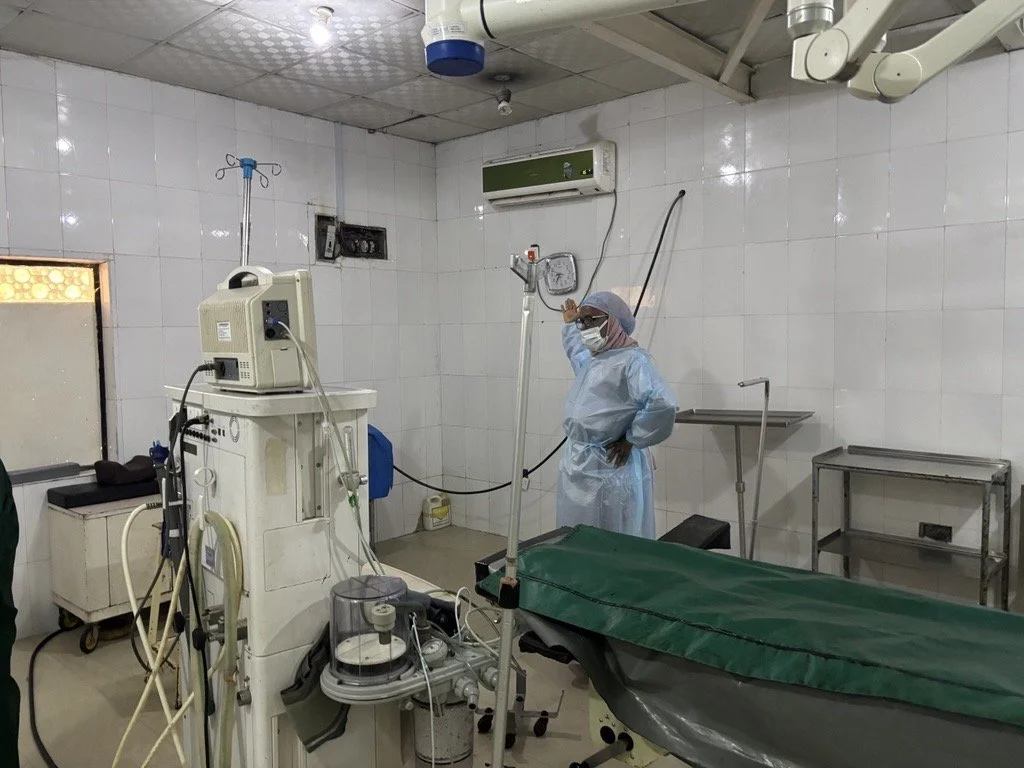
Care under constraint: Prof. Hadiza Galadanci in an operating room at Muhammad Abdullahi Wase Teaching Hospital. For the surgical teams in Kano, adaptability and improvisation are a daily necessity.
A Defining Moment: Everything Changed
One of Dr. Maryam’s earliest lessons came during her internship—an experience that continues to shape how she practices medicine.
“The patient removed both IV lines.”
A woman carrying twins arrived in advanced labor. Anticipating complications, Dr. Maryam prepared carefully: IV access secured, blood arranged, the team ready. The delivery itself was uneventful. Then, within moments, everything changed. The patient removed both IV lines.
“It felt like she opened a tap… she was just gushing blood. There was chaos everywhere.”
The postpartum hemorrhage that followed was sudden and severe. The team acted quickly, and the patient survived. But the moment lingered.
“I had never seen blood like that… it scared the hell out of me.”
Later, when Dr. Maryam asked why the lines had been removed, the answer was simple: the patient believed the delivery was over. From that moment, Dr. Maryam changed how she communicates with her patients.
“I always tell them why we do things… it makes a difference.”
“I had never seen blood like that...it scared the hell out of me.”
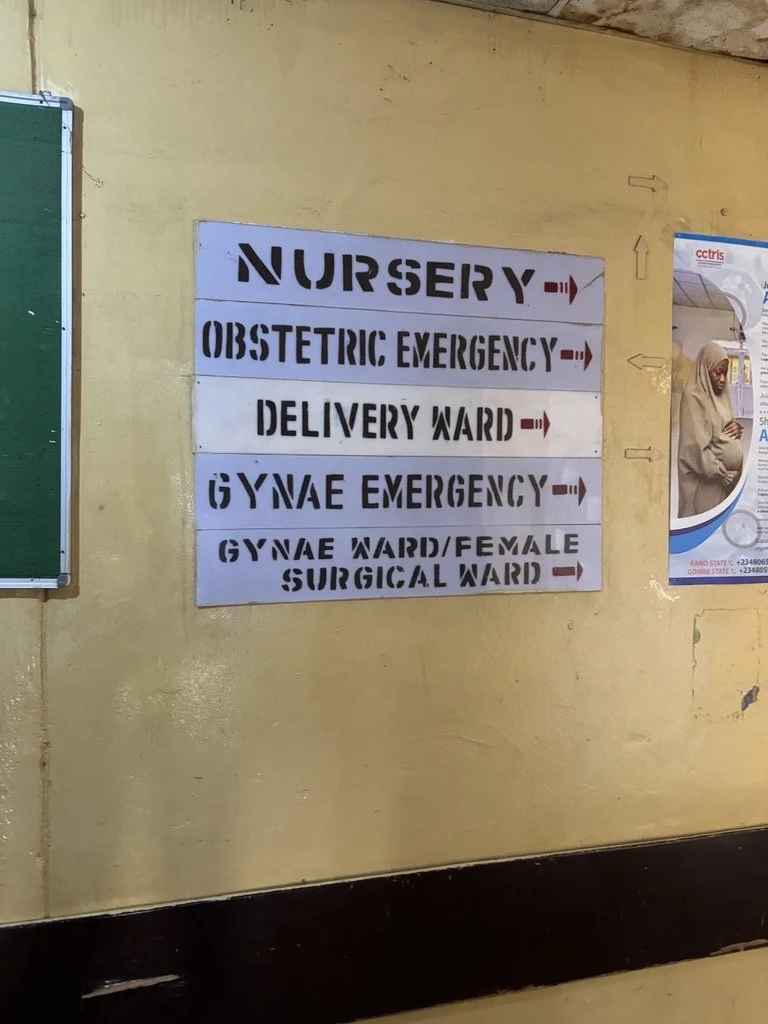
Where minutes matter: Directional signs guide patients through the maternity and surgical wards at Muhammad Abdullahi Wase Teaching Hospital.
When Improvisation Becomes the Norm
In northern Nigeria, delivering care often requires more than clinical knowledge—it demands adaptability.
“You know what you’re supposed to do… but sometimes you find yourself constrained,” Dr. Maryam explains.
At her hospital, a tertiary referral center, patients frequently arrive late—after delays in transport, referral, or decision-making. Resources can be limited. Blood may not always be immediately available. Staffing and infrastructure are stretched. In these moments, care becomes an exercise in improvisation.
“You would be surprised how much we have to improvise just to give our patients the standard of care they need.”
“Care becomes an exercise in improvisation.”
And yet, despite the constraints, there is clarity in the outcome.
“At the end of the day, you see the impact of what you’ve done… and that takes care of the frustrations.”
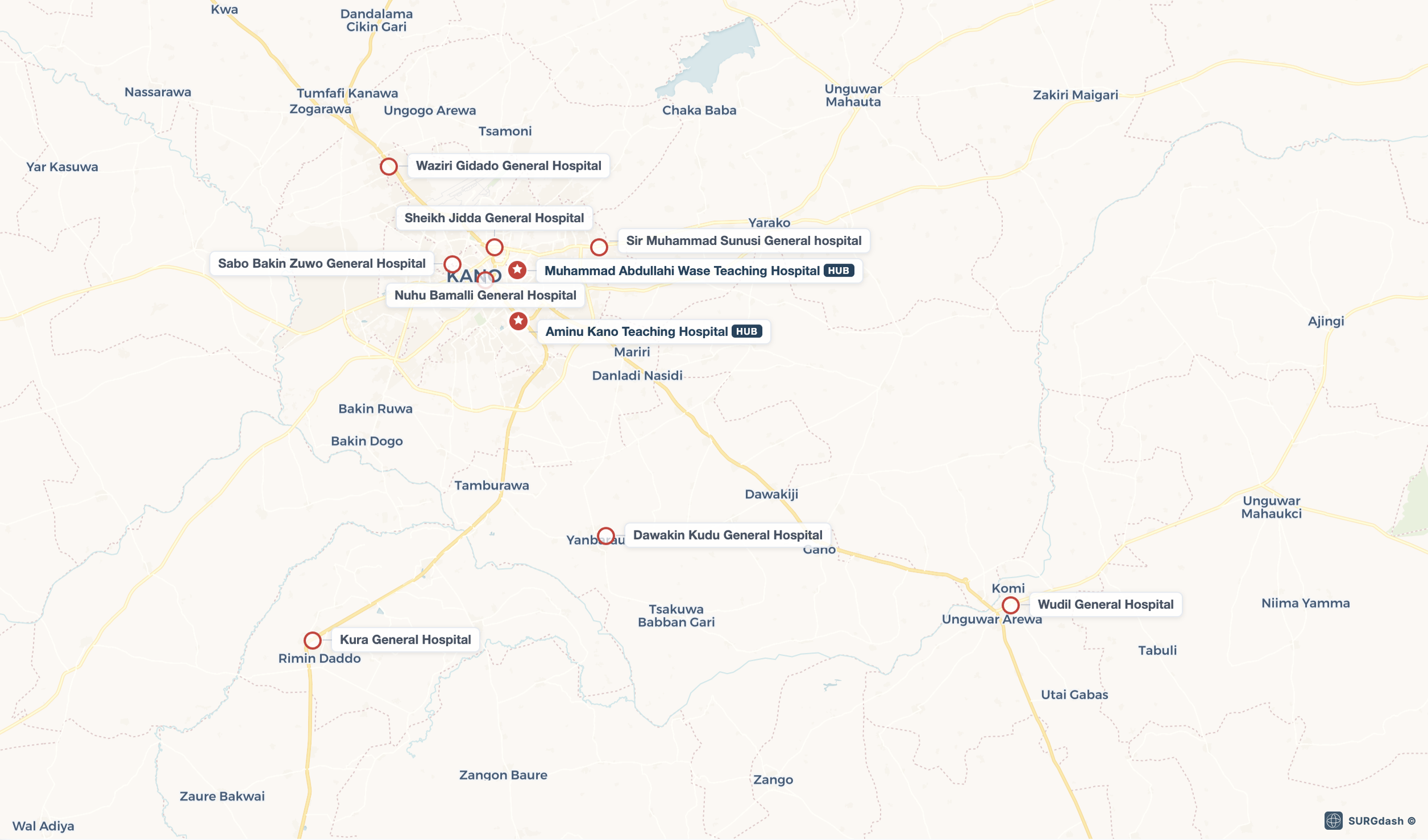
The Safe CS project network spans 10 high-volume facilities across Kano State. Anchored by two central teaching hospital hubs, this collaborative model is designed to improve access to safe surgical care for a catchment area of nearly one million women.
The Strength of a Team
If the work is unpredictable, the team is constant.
“We see each other like siblings,” she says.
Daily reviews create space for reflection—discussing complications, identifying mistakes, and reinforcing lessons. It is a system built not just on accountability, but on trust.
“It’s the feeling of ‘we’re in this together’ that makes the work better.”
Small Changes, Measurable Impact
Through training supported by the Global Surgery Foundation, Dr. Maryam began to rethink routine practices in her operating rooms.
“There is this feeling that ‘I know it’… but I realized there is a lot I didn’t know.”
Simple, evidence-based interventions—timing of prophylactic antibiotics, vaginal cleansing before incision, and proper skin preparation—began to change outcomes.
“I can’t remember the last time I saw a surgical site infection.”
The changes extended beyond surgery. Greater emphasis on immediate newborn care—skin-to-skin contact, delayed cord clamping, early breastfeeding—has improved outcomes for both mothers and babies.
“The baby needs the same care… it’s the same process, just a different route.”
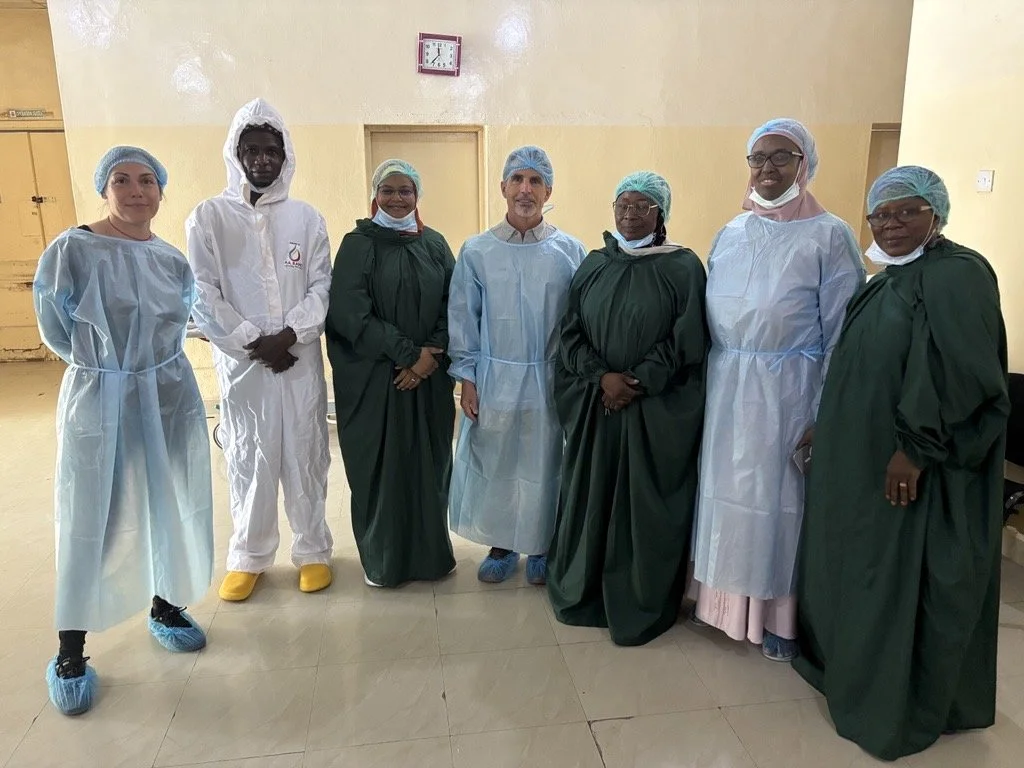
Dr. Maryam (third from left) with colleagues and project team members at Muhammad Abdullahi Wase Teaching Hospital in Kano, Nigeria.
Access: The Difference Between Life and Death
For Dr. Maryam, the biggest challenge is not always what happens inside the hospital—but what happens before a patient ever arrives.
“Sometimes it’s not about availability of healthcare, but access.”
Access can mean transportation, affordability, or timely referral. It can mean the difference between reaching care in time—or not at all.
“Access means a lot… it can be the difference between life and death.”
“I love what I do!”
Dr. Maryam still works in a system that demands constant adaptation. The days remain unpredictable. The challenges persist. But the purpose is clear.
“I have never felt regret for joining obstetrics and gynecology,” she says. “I love what I do.”
And in a place where minutes matter, that conviction continues to shape every decision she makes—one patient at a time.
Keep engaged with us!
Learn more about the Kano project
Donate to support the Kano project
Sign up with your email in the footer to receive updates