Surgery Takes Centre Stage at WHA79 — with a Record Wave of Catalytic Funding
With a growing coalition of new donors behind SURGfund, the catalytic model for surgical care is moving from proof of concept towards scale and the results are already saving lives.
Watch as global health leaders gather at WHA79 to announce major new catalytic investments in surgical care.
A Story That Should Never Happen
She was 18 years old, pregnant, and in crisis. Brought in as an emergency, she was too sick to wait. She had continuous convulsions. And yet, before she reached the hospital where she would finally receive care, she had already been turned away by five others.
When she finally reached a facility that could act, she was taken to theatre for an emergency caesarean section. She died on the table. Her baby did not survive either.
Mary Mungai, Nurse Anaesthetist at AIC Kijabe Hospital in Kenya, shared this story at the Global Surgery Foundation's WHA79 side-event, What's Next for Philanthropy: Investing in Local Leaders for Impact, held on 18 May 2026 at the Hôtel InterContinental Geneva. It is not an outlier.
It is a pattern: women in low- and middle-income countries are up to 100 times more likely to die from a caesarean section than women in high-income countries. Not because the procedure is different. Because the system around it is not there.
Every one of those five hospitals that turned her away represents a failure of the surgical system. And every one of them represents a system ready to change.
“A growing coalition of contributors backed SURGfund at the 2026 World Health Assembly”
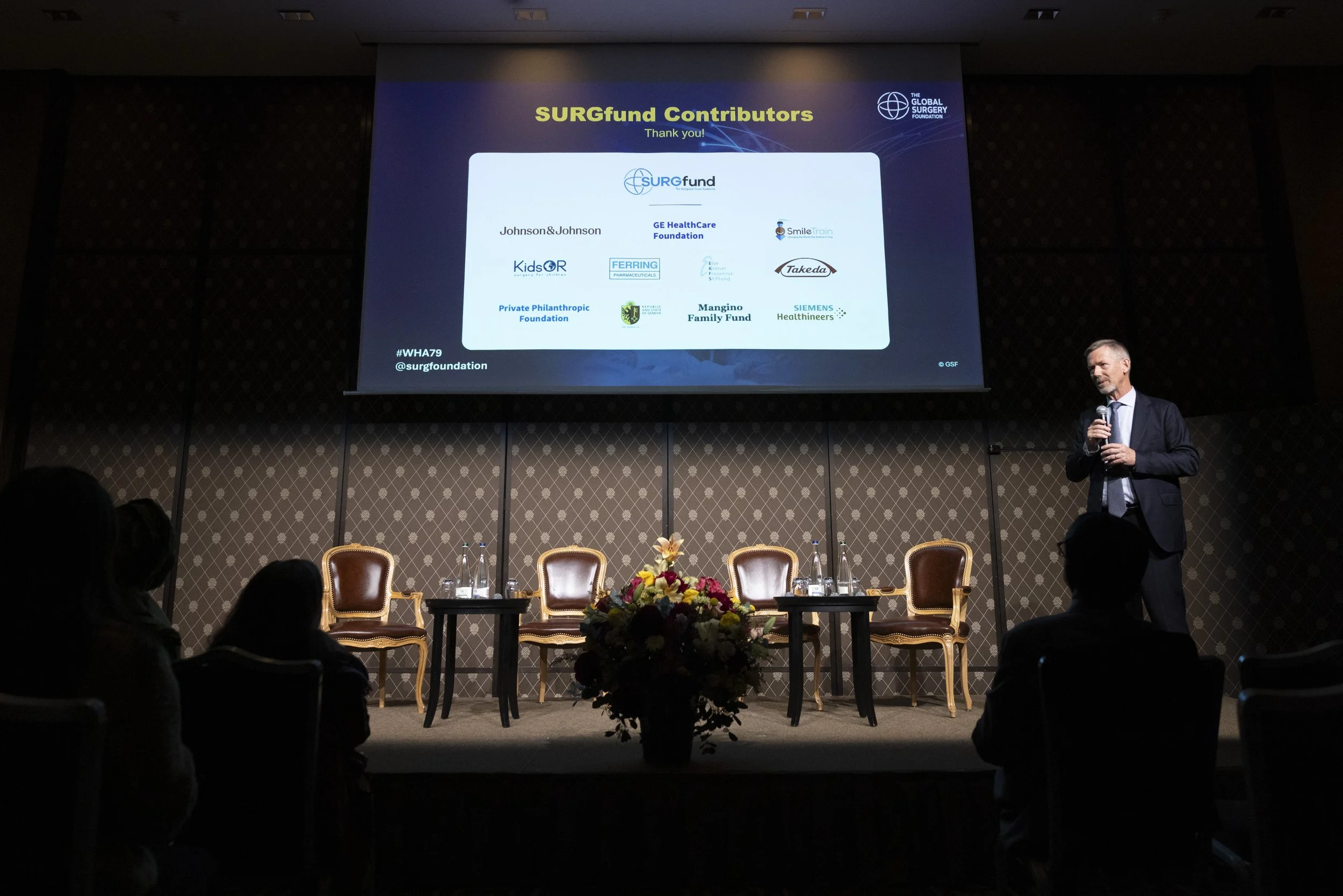
The SURGfund coalition is growing. A new coalition of contributors joined the movement in May 2026 at WHA79, scaling a model that is already saving lives — with a record impact expansion in 2025.
This week in Geneva, change accelerated.
In a packed room at the WHA79 side-event, a cohort of donors stepped forward to announce financial commitments to SURGfund backing a model that is already delivering, and signalling that surgical care has firmly arrived at the centre of the global health agenda.
Johnson & Johnson, a long-standing partner of the GSF, deepened their commitment with a renewed $1 million contribution to SURGfund, building on a legacy of strengthening surgical systems and the surgical care workforce worldwide. "We had the honour of giving our first contribution to SURGfund last year, and the impact and growth we have observed since has been amazing. The mechanism is working and I call on all partners: governments, the private sector, and beyond, to join in." — Aleksandra Krygiel-Nael, J&J MedTech
“I am proud to announce that the J&J Foundation is renewing its $1 million contribution to SURGfund.”
The GE HealthCare Foundation joined the SURGfund coalition for the first time, bringing a powerful financial commitment to health equity and local impact to surgical systems strengthening. "GE has supported safe surgery for decades. Today, we are building on that legacy, and I am pleased to announce that we are supporting SURGfund. Our vision is a world where no woman dies from preventable causes during childbirth, a world where healthcare workers are trained, equipped, and empowered, and where local leaders are central to designing the solutions. That is why we are investing in this work through SURGfund." — Abigail Epane-Osuala, GE HealthCare Foundation
“I am pleased to announce that the GE HealthCare Foundation is supporting SURGfund.”
The Mangino Family Fund and a private philanthropic organisation also joined the coalition, their contributions announced from the stage by GSF Board Member Nikhil Seth, reflecting a broader movement of philanthropic capital turning decisively toward locally-led, high-impact global health solutions. "I am announcing that $1.1 million has been committed to SURGfund by a private philanthropic organisation, alongside $250,000 from the Mangino Family Fund. This will allow us to expand our work, double the facilities we reach in Kenya, and make care safer for women and their newborns. To potential donors: fund and support what is already succeeding. This is a model that works." — Nikhil Seth, GSF Board Member
What these commitments mean in practice is concrete: more healthcare workers trained, more facilities strengthened, and more patients receiving the surgical care that can mean the difference between life and death. Together, the coalition of SURGfund contributors is building the surgical foundation for healthcare systems.
“An additional $1.1 million and $250,000 have been committed from a private philanthropic organisation and the Mangino Family Fund.”
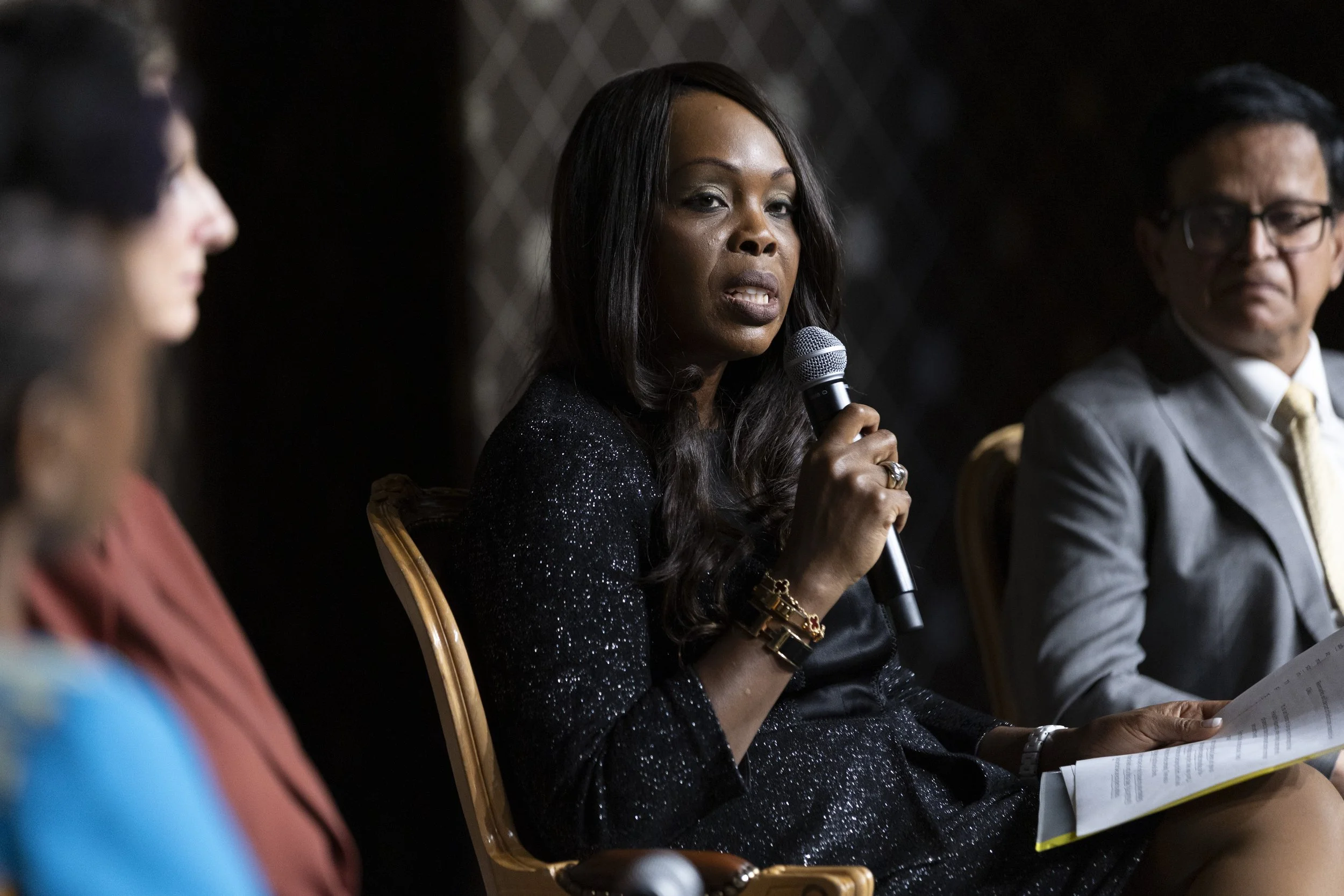
Abigail Epane-Osuala announces the GE HealthCare Foundation's financial commitment to SURGfund — building on decades of GE's leadership in safe surgery.
A Model Already Delivering: Impact at Scale
This is not theoretical. The model these new partners are backing has just delivered its biggest year yet.
Last year, at WHA78 in Geneva, a wave of catalytic donors announced new commitments to SURGfund, and the field took notice. What followed was the biggest expansion of SURGfund since its launch in 2023.
The results are now in and they show impact starting to happen at scale.
In 2025, the Global Surgery Foundation reached a population of nearly 25 million people. Across eight active projects, we delivered improved surgical care to over 135,412 patients and strengthened 23 healthcare facilities. In Kano, Nigeria, our SURGfund project reached 30,000 mothers and newborns with improved care in its first year alone. In Nakuru, Kenya, the region Mary Mungai knows intimately, 44,000 mothers and newborns benefited from improved surgical care through our SURGfund project. In Koshi, Nepal, more than 26,000.
“We drove the biggest programme expansion of SURGfund since its launch in 2023.”
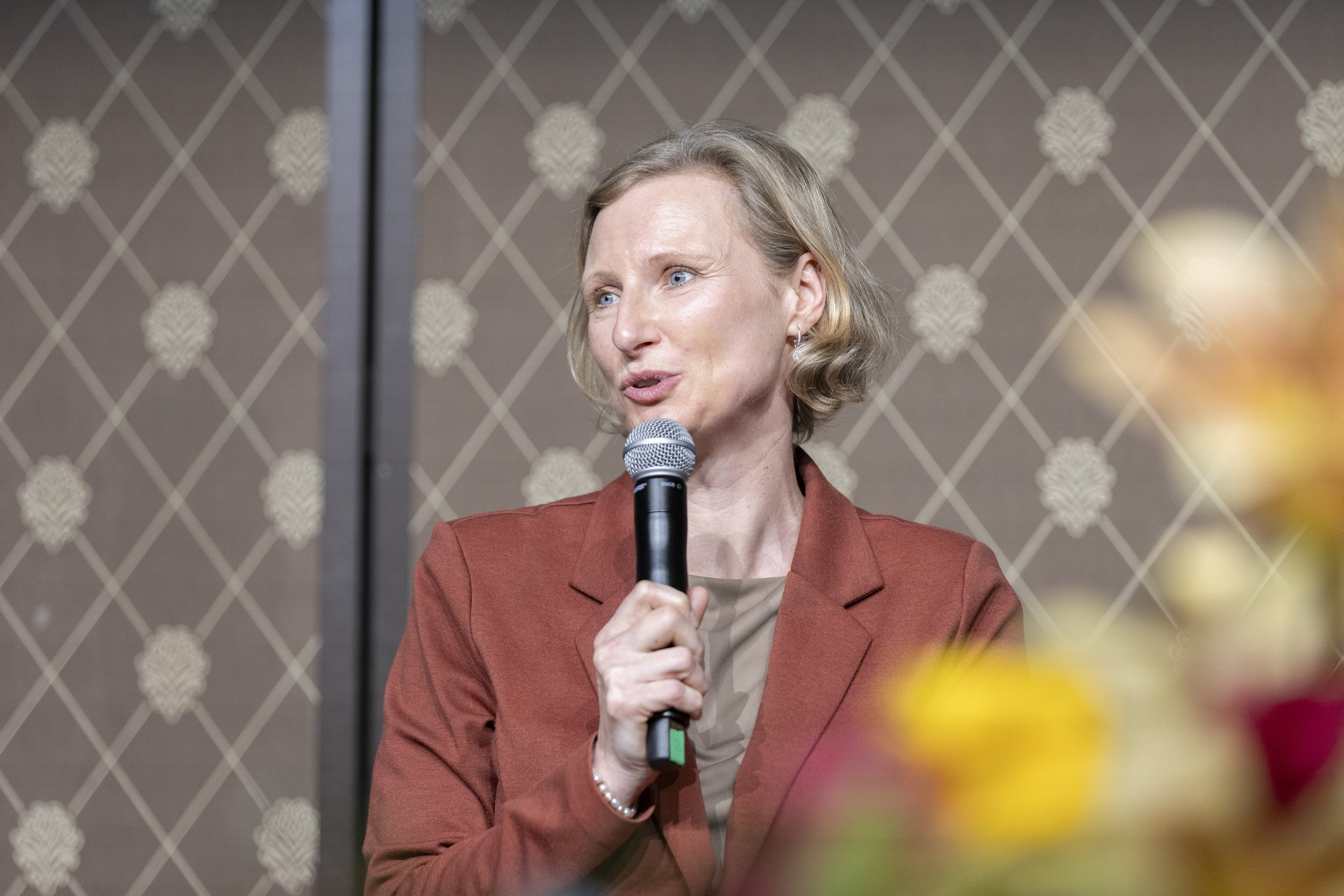
"I call on all partners — governments, the private sector, and beyond — to join in." — Aleksandra Krygiel-Nael, J&J MedTech, announces the Johnson & Johnson Foundation's new $1 million commitment to SURGfund at WHA79.
In 2025, hand-in-hand with our partners, we helped make sure that over 135,412 patients did not suffer the same fate as that 18-year-old girl. Next year, thanks to a growing coalition of catalytic partners, that number will be even greater.
Meanwhile, SURGhub, the UN Global Surgery Learning Hub, earned the Gold Award at the QS Reimagine Education Awards, recognition of a platform that is quietly becoming the backbone of surgical training worldwide.
As Dr. Geoff Ibbotson and Prof. Rifat Atun noted in our 2025 Annual Report: "Instead of pulling back in 2025, we scaled up. We drove the biggest expansion of SURGfund since its launch in 2023."
The Catalytic Model: Why It Works
SURGfund is the world's first and only pooled financing mechanism for surgical care systems. It does not simply fund projects, it catalyses them.
At its core, the model rests on three pillars. We mobilise the world's surgical expertise, acting as the lead global matchmaker of best-in-class clinical, policy, and funding experts on a UN-incubated, neutral platform to turn complex challenges into coordinated action. We accompany local leaders throughout implementation, working alongside frontline partners from inception to co-implementation to build the sustainable local capacity that outlasts external support. And we provide catalytic financing through pooled resources — eliminating fragmentation, de-risking investments, and channelling funding efficiently into country-driven priorities.
Once results are demonstrated, that same evidence becomes the basis for government investment, turning donor-backed demonstration projects into permanent budget lines.
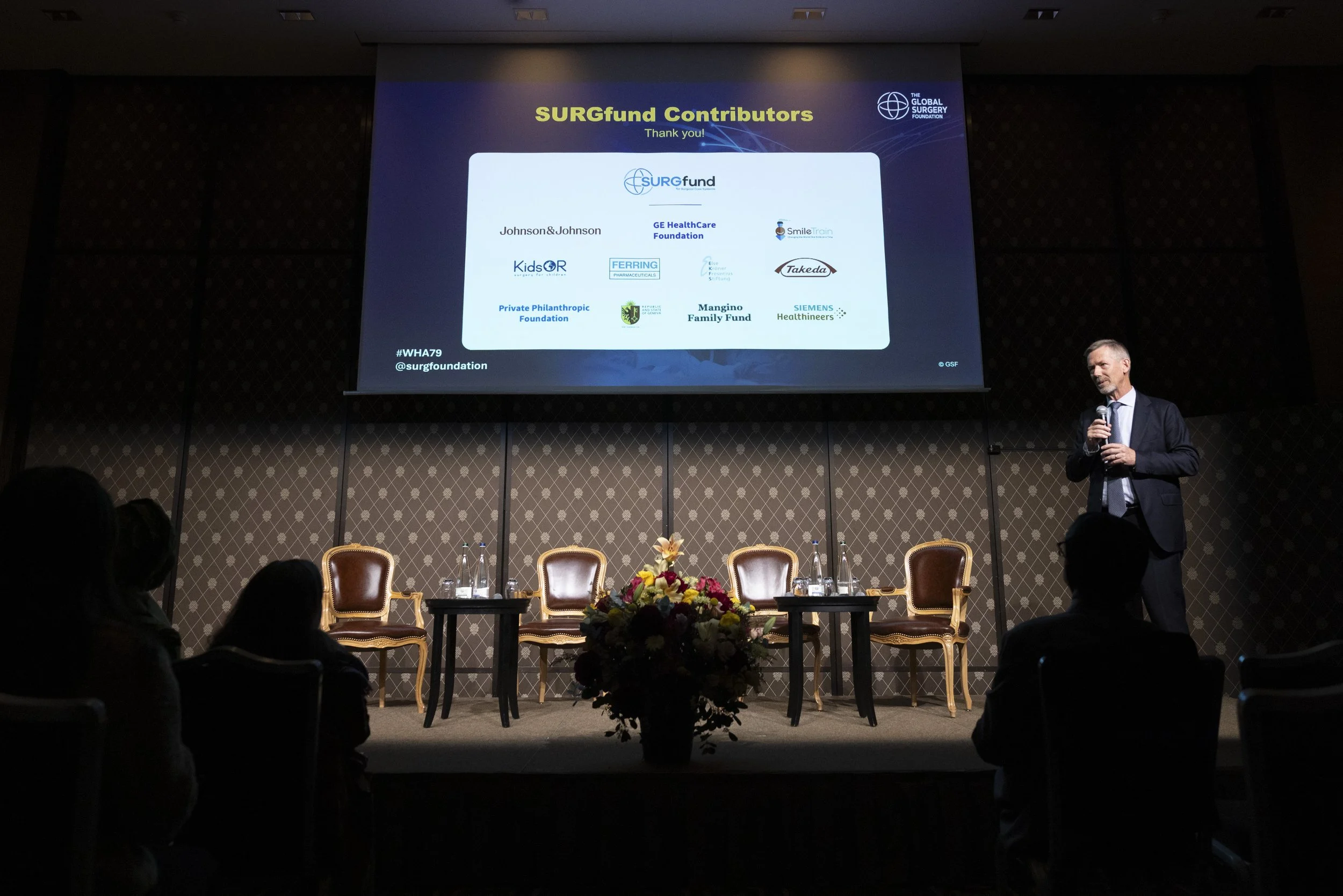
"This is a model that works — now let's get to work." GSF Executive Director Dr. Geoff Ibbotson closes a packed WHA79 side-event with a call to scale.
What Comes Next
The 18-year-old girl who died on that table, and the five hospitals that could not help her, represent the surgical gap we are closing.
Back in Kenya, Mary Mungai remembers another patient: a young woman who arrived at the hospital in labour, frightened, and far from home. The surgical team was ready. She went home with her baby.
With a proven model, growing evidence, and an expanding coalition of catalytic partners, WHA79 marks the moment we shift our model from early adoption to scale. The dust has settled. The foundation has been poured. And we have started to build.
This WHA79 side-event was hosted by the Global Surgery Foundation, in association with Johnson & Johnson and Smile Train.
About the Global Surgery Foundation
The Global Surgery Foundation (GSF) is the lead global platform for surgical care systems strengthening. Operating on a UN-incubated, neutral platform, GSF mobilises world-class clinical, policy, and funding expertise to support local leaders in building surgical systems that are efficient, resilient, and sustainable. Through SURGfund — the world's first and only pooled financing mechanism for surgical care — and SURGhub — the UN Global Surgery Learning Hub — GSF is translating catalytic investment into measurable, lifesaving impact across low- and middle-income countries.
www.globalsurgeryfoundation.org
Keep engaged with us!
Read the GSF 2025 Annual Report
Learn more about SURGfund
Yes — you can join the SURGfund coalition with an individual donation
Sign up with your email in the footer to receive updates
Your Next Article
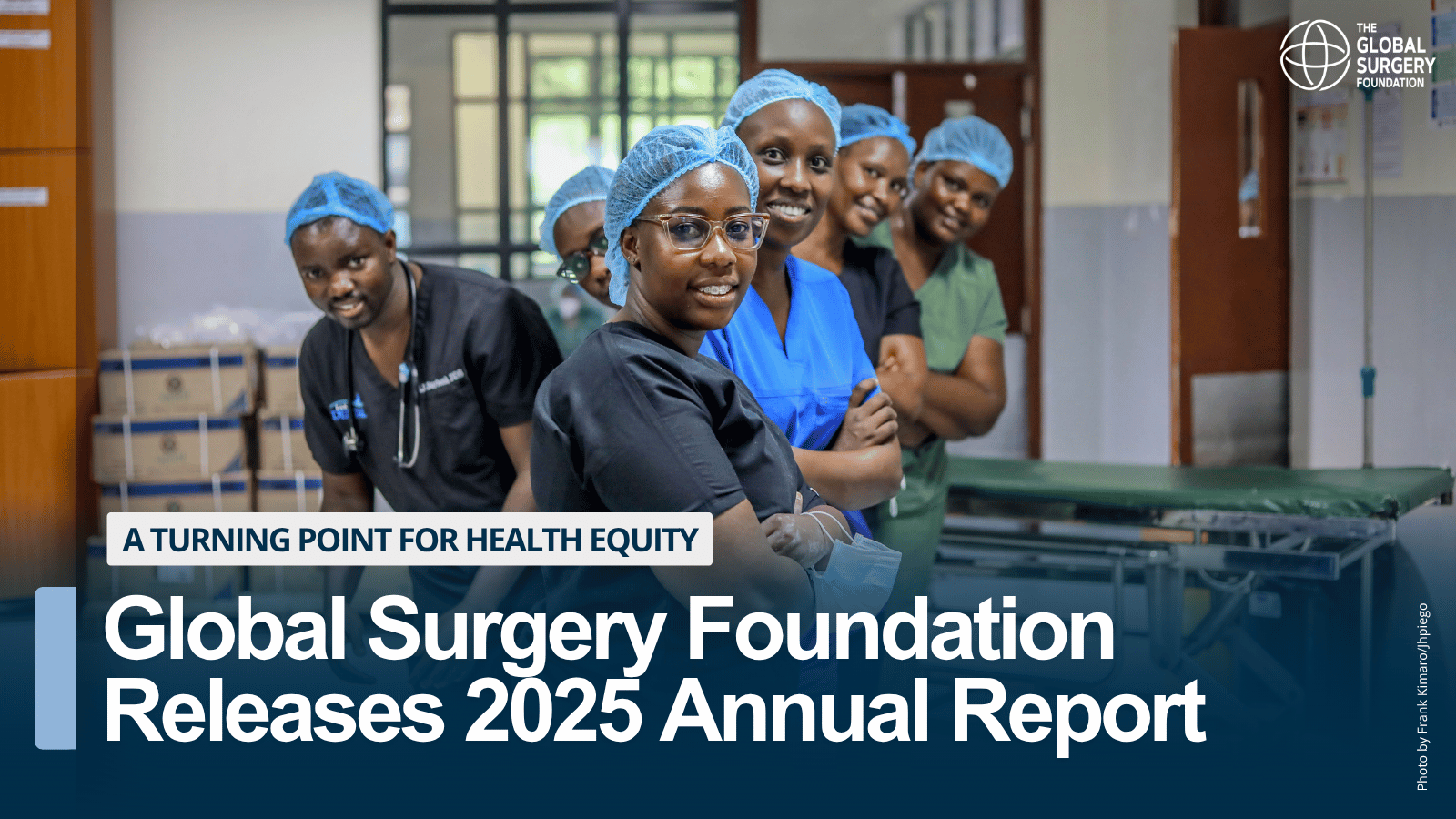
The Global Surgery Foundation’s 2025 Annual Report marks a decisive turning point for global health. Read more