
In the latest instalment of Voices of Global Surgery, Jivance Peter Odiwuor describes the quiet vigilance of the person at the head of the operating table, and remembers the mother and baby who survived a case that left no luxury of time.
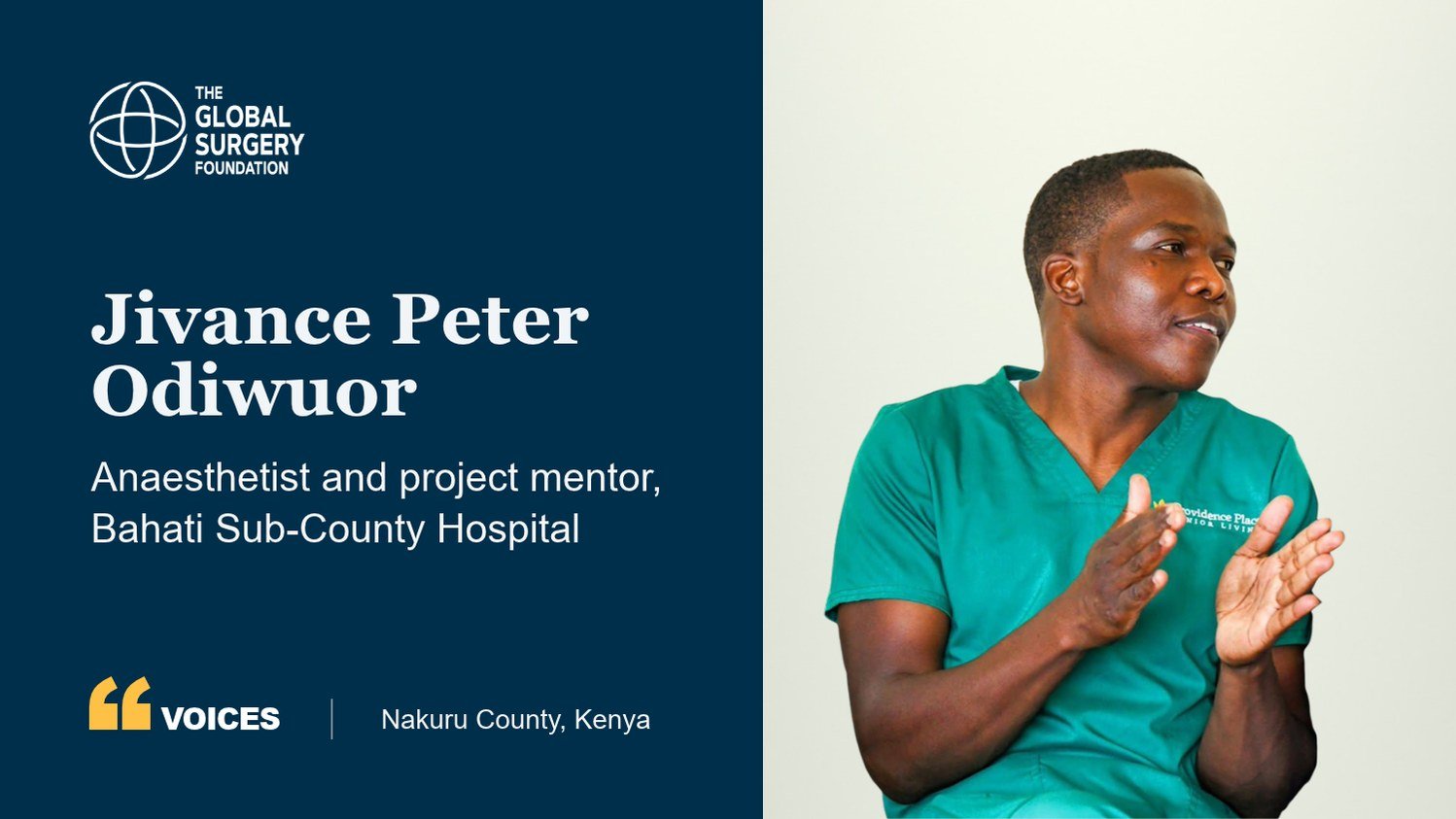
Health workers around the world see where surgical care falls short. In Voices of Global Surgery we highlight their stories.
Bahati, Kenya — Five minutes before an operation, Jivance Peter Odiwuor may be shaking a patient’s hand. Moments later, that same patient is relying on him for everything. “Patients literally trust the anaesthesia provider with their life, consciousness, every single breath and more,” he says. He calls this role “one of the most critical in surgery”, and far more than that of a silent guardian of the operating room.
Bahati, whose name means “luck” in Swahili, is a farming area in Nakuru County, in Kenya’s Rift Valley, where farmers grow maize, beans, and vegetables. Jivance is an anaesthetist at its sub-county hospital, which has a single operating theatre. He is also a mentor in the safe caesarean section project in Nakuru County, supported by GSF. His work runs through three phases: evaluation and planning before surgery, continuous support of the patient’s vital functions during it, and recovery and pain control afterwards, with complications met as they arise. Outside theatre he also cares for patients in critical care and high-dependency units. Many a time, he says, he doubles up as a perioperative physician, combining “clinical knowledge, technical precision, critical shared decision-making, and compassionate communication” to keep patients comfortable and stable.
It Feels Almost Musical
“A day in my life as anaesthesia provider is shaped by rhythm,” Jivance says, “but it is a rhythm that can sometimes change without warning.” The day often begins quietly: reviewing patients, checking the anaesthesia machine, preparing medications, and planning for the procedures ahead. In theatre the pace becomes more deliberate. Induction is the moment that stands out, when the room grows focused, voices become purposeful, and a patient passes from consciousness into a controlled state of unconsciousness.
“Maintenance of anaesthesia feels almost musical,” he says. Vital signs, monitors, surgical movements, and drug doses form a continuous pattern that must be watched closely, and it can vanish in an instant with a sudden drop in blood pressure, an unexpected airway difficulty, or an abnormal heart rhythm. Obstetric patients carry their own risks. Pregnancy changes every system in the body, and a spinal anaesthetic for a caesarean section can send a mother’s blood pressure falling sharply; a watchful, anticipating mind and timely action are what avert complications. “Some days truly can make one question every life choice that took a person in there,” he admits, “and yet I keep going back into the OR.”
At the end of the day comes another quiet rhythm: watching a patient wake, breathe independently, and return safely to consciousness. “The work is therefore neither completely rhythmic nor chaotic,” he says. “It is a constant balance between preparation, vigilance, and responding calmly when the rhythm suddenly changes.”
“Maintenance of anaesthesia feels almost musical.”
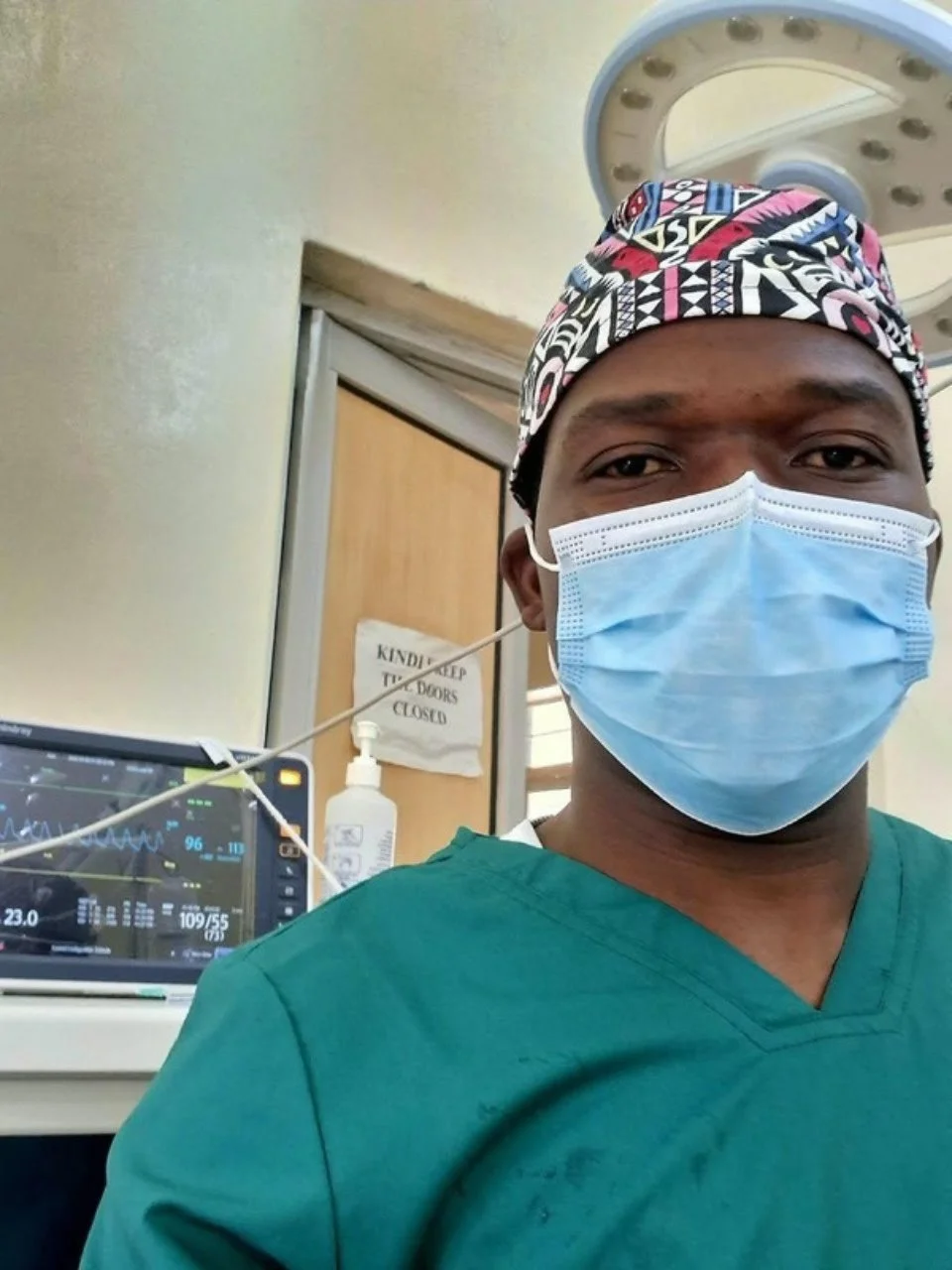
Jivance in theatre at Bahati Sub-County Hospital, a Level 4 public hospital run by the Nakuru County Government.
No Luxury of Time
The case he remembers most is that of a woman who arrived with a ruptured uterus, her baby found in the abdominal cavity. There had been delays in recognising how serious her condition was and in reaching a facility that could treat her, and further delays at Bahati in getting her into the operating theatre and assembling the team and resources she needed. With only one theatre, competing emergencies could become a crisis at any moment. By the time she reached the operating table she was critically ill, at risk of haemorrhage and hypovolaemia, her own life and her baby’s in danger.
“From an anaesthesia perspective, there was no luxury of time,” Jivance says. Resuscitation had to run alongside preparation for an emergency laparotomy and the possibility of massive blood loss, while the laboratory grouped and crossmatched blood. Securing reliable intravenous access, preparing blood and fluids, setting up monitoring, anticipating a difficult airway and an unstable circulation, and keeping up constant communication with the surgical and neonatal teams were all essential, and the limits of equipment and space meant improvising safely and prioritising hard.
“From an anaesthesia perspective, there was no luxury of time.”
Despite the delays and the difficult circumstances, both mother and baby survived. Seeing the mother stabilise, even after a subtotal hysterectomy, and knowing that her baby had survived too, was “an extraordinarily powerful moment,” he says.
The case changed how he practises. He became more vigilant for early signs of obstetric deterioration, more proactive in preparing for catastrophic haemorrhage, and more deliberate about anticipating what could go wrong before induction. In obstetric anaesthesia, he learnt, preparation often has to begin before the emergency has fully unfolded. It changed him emotionally, too. “It reminded me that behind every emergency is a mother, a newborn, and a family depending on them,” he says. “It taught me that while equipment and infrastructure are important, preparedness, teamwork, clinical judgement, and the determination to keep going can sometimes make the difference between tragedy and survival.”
“Behind every emergency is a mother, a newborn, and a family depending on them.”
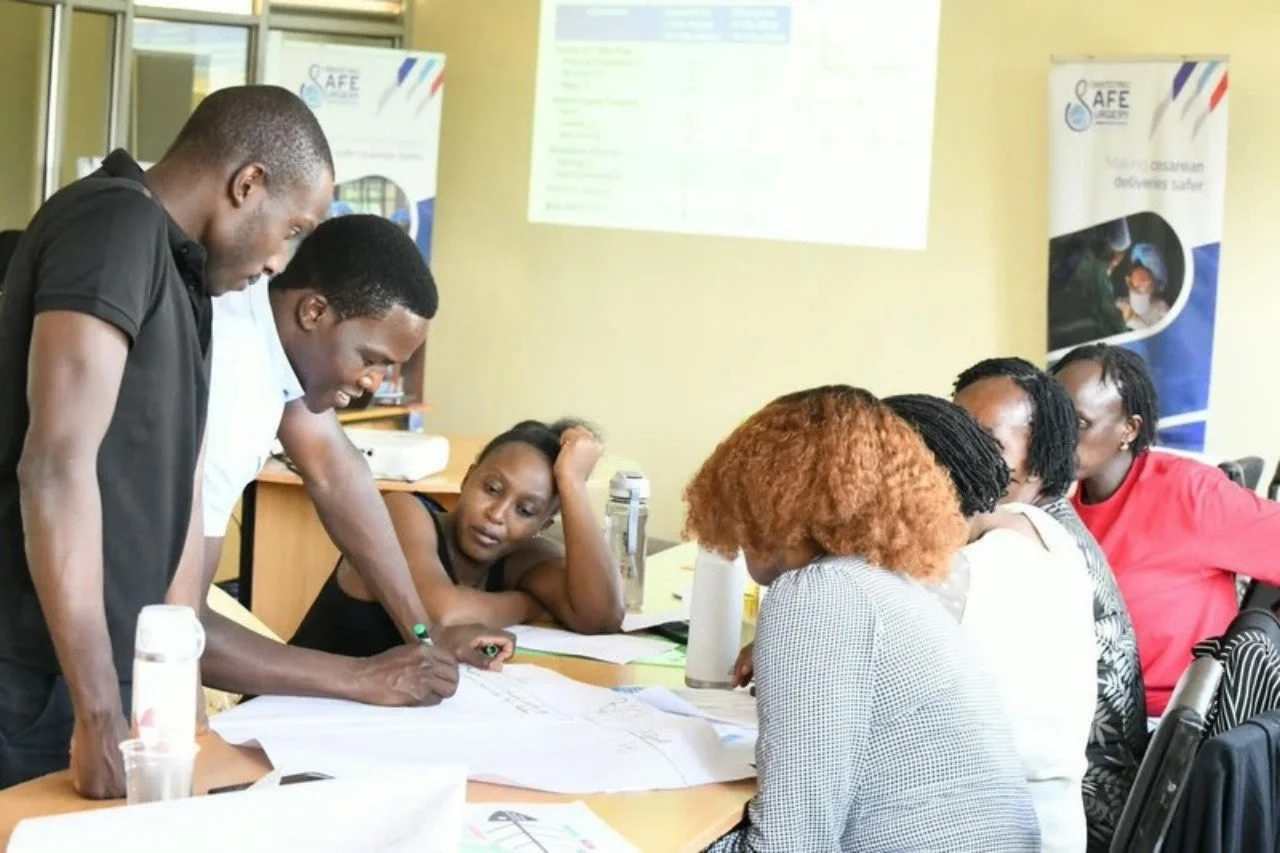
Participants work through an exercise together at a training session for the Nakuru County project.
All for the Benefit of One Person
Training through the Nakuru County project taught him that safety for mothers and newborns reaches beyond technical anaesthesia skills. “One of the most important takeaways was the importance of teamwork, communication, and shared responsibility,” he says. The training sharpened the details of safe obstetric surgery: standardising caesarean sections; an infection prevention bundle of timely prophylactic antibiotics, vaginal cleansing, and skin preparation with the right solution for thirty to sixty seconds; structured preoperative assessment; careful, coordinated use of the Surgical Safety Checklist; and enhanced recovery after anaesthesia, above all pain management and follow-up that continues beyond discharge. Mentorship followed, then a trainer role. Training a wider multidisciplinary team showed him that “sustainable improvement depends not only on knowledge transfer but also on building confidence, teamwork, accountability, and local ownership.”
Working inside a multidisciplinary team shaped him as much as the formal training did. Obstetricians taught him to anticipate surgical challenges and communicate early, baby nurses strengthened his understanding of preparing for the newborn, and scrub and theatre nurses showed him the value of organisation and situational awareness. Over time, the team moved from working mainly within individual professional roles to functioning as one supportive unit. “Trust developed through consistency, respect, open communication, and knowing that colleagues would speak up when they identified a concern,” he says, “all for the benefit of one person: the patient.”
Jivance describes a caesarean section in which stable twins were placed skin to skin with their mother and began breastfeeding within minutes of delivery, essential newborn care that he makes room for from his place at the head of the table. “I champion this and create space for such practice,” he says. Across the project’s facilities, early initiation of breastfeeding after caesarean section has risen by 90%. In his own hospital, he has grown more confident in mentoring colleagues and contributing to “a culture where patient safety is a shared responsibility.”
Investment in the Whole Surgical System
He wishes more people understood what safe surgical care in a resource-limited setting involves: inadequate equipment, unreliable infrastructure, limited supplies, and shortages of trained staff, with local teams who keep providing care “with commitment, creativity, and resilience.” “The solution should not be simply to provide more equipment,” he tells global health leaders. “We need sustainable investment in the whole surgical system,” from a piped oxygen supply, electricity, functioning anaesthesia machines and monitors, and essential medicines to safe operating theatres, adequate staffing, and continuous training and mentorship. “Equipment must also come with maintenance, appropriate infrastructure, and people who are trained and supported to use it.”
“Safe surgery should not depend on extraordinary effort from ordinary healthcare workers.”
Above all, he asks leaders to listen to local healthcare workers and “invest in solutions designed with them, rather than for them.” Strengthening the workforce and building resilient systems, he says, will have a lasting impact far beyond a single project. “Safe surgery should not depend on extraordinary effort from ordinary healthcare workers; it should be supported by a system designed to make safe care possible.”
Voices of Global Surgery
Meaningful progress requires listening to those who know it best: the people with lived experience. Their unique expertise is irreplaceable when it comes to understanding and fixing the gaps in quality surgical care. In this series, we highlight the voices of those most affected to explore the critical barriers, challenges, and opportunities in achieving safe surgical care for all.
About the Project
The Obstetric Safe Surgery – Nakuru County Project is a targeted intervention designed to improve maternal and perinatal outcomes for women across Nakuru County, Kenya. It strengthens the local health system through a hub-and-spoke training model that builds surgical team capacity, improves referral networks, and enhances data quality for decision-making. The project is led by the Nakuru County Department of Health, Jhpiego, and AIC Kijabe Hospital, in close collaboration with the Ministry of Health of Kenya, with support from the Global Surgery Foundation (GSF).
globalsurgeryfoundation.org/oss-nakuru
About the Funding & Accompaniment
The project is supported by SURGfund. SURGfund is our collaborative funding platform, through which we mobilise and invest funding in partner-led solutions that expand access to safe surgical care and strengthen surgical systems. In addition to SURGfund financing, GSF accompanies the project’s partners to ensure long-term sustainability.
Your Next Article
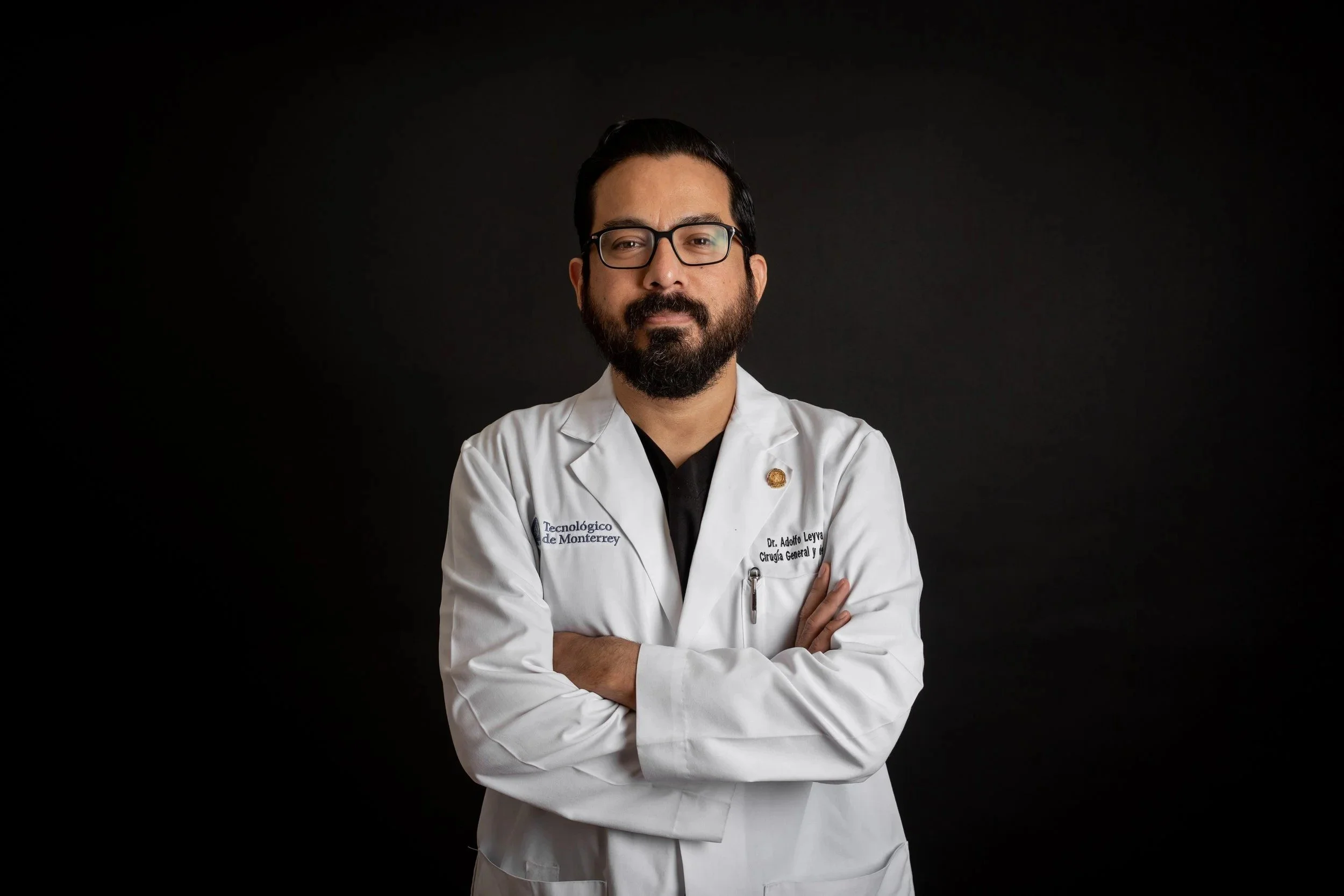
Dr. Adolfo Leyva-Alvizo has trained surgeons in Monterrey since 2007. Now he and his colleagues at TecSalud are bringing their teaching to SURGhub, in Spanish and English. Read article.