
Breast Cancer Awareness Month: Invest in the Surgical Team
Surgery remains the cornerstone of multimodal breast cancer treatment. Professor Freddy Gnangnon, a surgical oncologist in Cotonou, Benin, explains why women in sub-Saharan Africa need not only access to an operation, but surgical teams trained to perform it safely as part of multidisciplinary care.
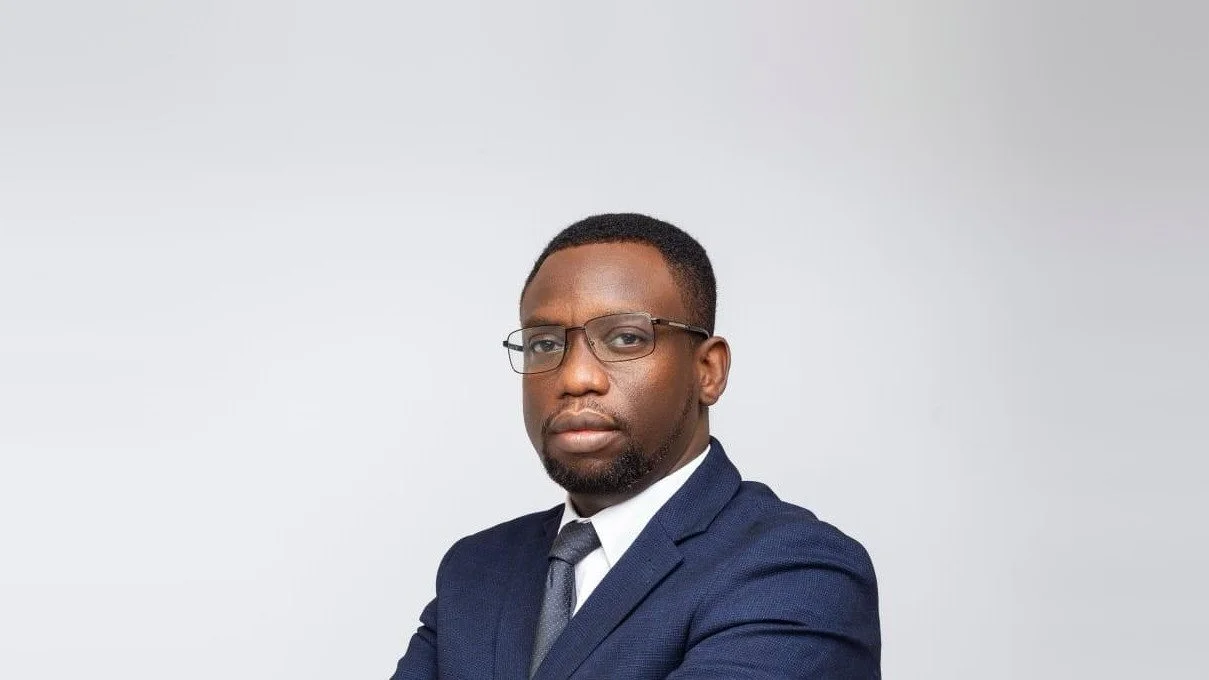
In this series we highlight the members of the Global Surgery Foundation’s High-Level Council and Technical Advisory Council.
Some women in sub-Saharan Africa still hear a warning about breast cancer: “when the knife touches breast cancer, death follows”. For Professor Freddy Gnangnon, it is “a fear partly reinforced by past experiences of inadequate cancer surgery”. He is Full Professor of Surgical Oncology at the University of Abomey-Calavi and a consultant surgical oncologist at the National University Hospital (CNHU-HKM) in Cotonou, Benin.
Professor Gnangnon is a member of the Global Surgery Foundation’s Technical Advisory Council. “I joined GSF’s Council because I felt a strong need to help improve access to safe, high-quality surgical care, including cancer surgery, beyond the walls of my hospital and the borders of my country,” he says.
For Breast Cancer Awareness Month, we sat down with him to talk about why surgery remains central to curing breast cancer, what keeps women in sub-Saharan Africa from it, and what he would ask health ministers to fund first.
“This reality highlights both the central role of surgeons and the urgent need to strengthen multidisciplinary cancer services”
Breast cancer is treated with a combination of surgery, chemotherapy, radiotherapy and hormone therapy. “Surgery remains the cornerstone of curative treatment for breast cancer because, for most localised tumours, long-term cure still requires surgical removal of the cancer,” he says. “Its importance is even greater in sub-Saharan Africa, where it is often the only available treatment option.”
Workforce shortages stretch the surgeon’s role further. “Because of severe shortages in the oncology workforce, surgeons may also have to coordinate chemotherapy and palliative care; for several years, after receiving additional training, I led one of the main chemotherapy units in my country.” He draws two lessons from that. “This reality highlights both the central role of surgeons and the urgent need to strengthen multidisciplinary cancer services.”
“60–70% of women are diagnosed at an advanced stage”
For many women, the obstacles start long before they reach a surgeon. “The barriers are interconnected,” he says, “and begin with limited awareness, sociocultural beliefs and mistrust of surgery.” The warning about the knife is part of that mistrust.
Distance and cost come next. “Geography is another major obstacle, particularly for women in rural areas who live far from centres able to provide specialised breast surgery. Even when they reach such centres, many cannot afford care because surgery remains largely paid for out of pocket in many countries.”
The result shows in when women are diagnosed. “As a result of these barriers and the limited availability of organised early-detection programmes, 60–70% of women are diagnosed at an advanced stage and may also be unable to access the life-saving systemic treatment needed to make surgery possible.”
He also points to a striking disparity. “Although breast cancer incidence rates in sub-Saharan Africa are among the lowest in the world, mortality rates are among the highest, reflecting poorer survival outcomes,” he says. “According to the Global Breast Cancer Initiative (GBCI), while approximately 9 out of 10 women diagnosed with breast cancer in high-income countries are alive five years after diagnosis, this figure is only around 4 out of 10 in sub-Saharan Africa.”
“Although breast cancer incidence rates in sub-Saharan Africa are among the lowest in the world, mortality rates are among the highest”
The initiative, which WHO launched to bring together partners from around the world and reduce breast cancer deaths, aims for the reverse of his 60–70% figure: more than 60% of invasive breast cancers diagnosed at stage I or II. Its other targets are diagnosis within 60 days and more than 80% of patients completing multimodal treatment. Reaching them takes action across the whole care pathway, from early detection to timely diagnosis and comprehensive treatment.
WHO’s theme for this year’s Breast Cancer Awareness Month is “Every story is unique, every journey matters”. Asked about a patient who has stayed with him, Professor Gnangnon goes back about twelve years. “I diagnosed breast cancer in a young woman who had been referred to me after a long and difficult diagnostic journey,” he says. “Because treatment options were extremely limited in our country at the time, she travelled abroad for care and discovered there the power of civil-society advocacy; on returning to Benin, she founded one of the country’s first cancer organisations.”
“Although she later passed away, her courage, compassion and determination left a lasting impression on everyone who knew her. Her story reflects that of many African women, whom we affectionately call ‘Amazons’ in Benin, who fight with extraordinary strength, yet too often face the disease without the support they need.”
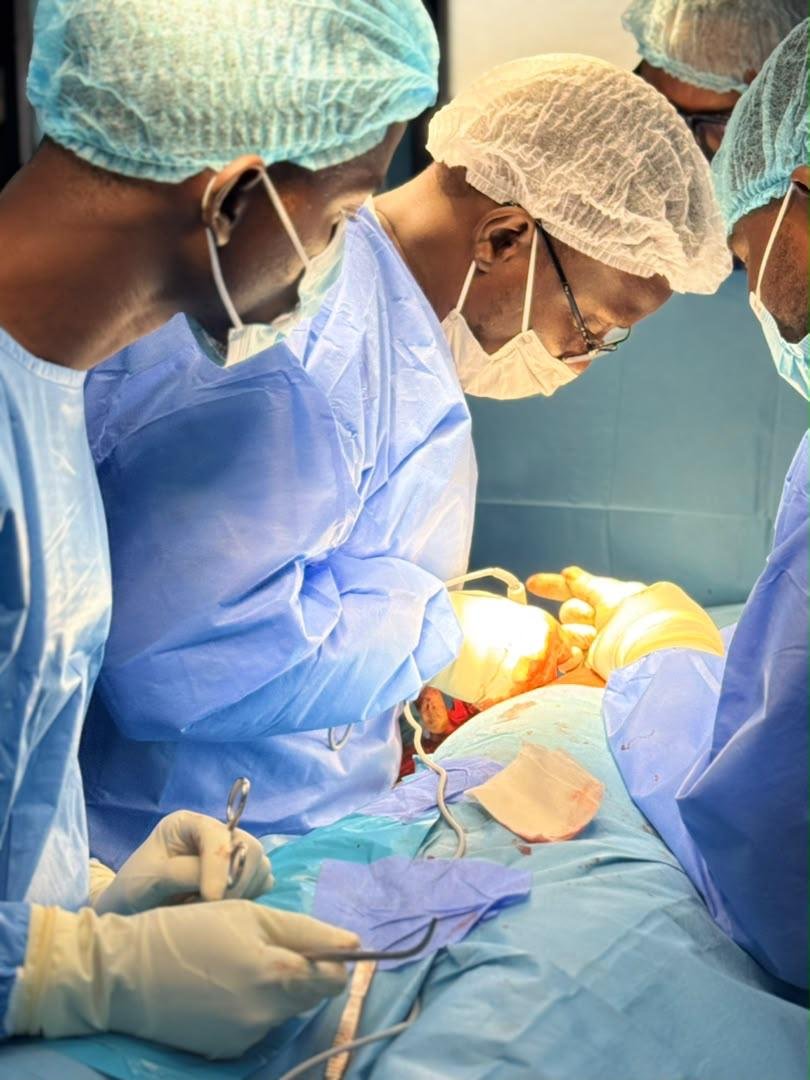
Professor Freddy Gnangnon (centre) operating alongside his surgical residents, the next generation of surgeons.
“This gap is particularly serious because outcomes depend not only on access to surgery, but also on whether surgeons and the wider care team are adequately trained”
Reaching an operating theatre is only part of it. The training to operate safely is scarce. “The situation is deeply concerning,” he says. “A WHO survey found that, in 2022, only 8 of 42 responding countries in the WHO African Region reported the availability of specialised training in surgical oncology. This gap is particularly serious because outcomes depend not only on access to surgery, but also on whether surgeons and the wider care team are adequately trained to deliver safe, evidence-based breast cancer care.”
“I would ask them to invest first in a skilled surgical workforce”
Asked what one thing he would ask health ministers to invest in for breast cancer surgery, he puts the surgical team first. “I would ask them to invest first in a skilled surgical workforce,” he says. “A well-trained surgeon who follows recognised oncological standards can provide safe breast surgery in difficult settings and save many lives.”
“Conversely, inadequate training can lead to harmful surgery, compromise subsequent treatment and reduce a woman’s chance of survival,” he adds.
Read more about the lived experience of breast cancer patients in the first pieces of our Voices series, and visit our page on breast cancer.
About Professor Freddy Gnangnon
Professor Freddy Gnangnon, MD, MPH, MSc, PhD, is Full Professor of Surgical Oncology and Head of the Surgical Oncology Unit at the Faculty of Health Sciences, University of Abomey-Calavi, and a consultant surgical oncologist at CNHU-HKM in Cotonou, Benin. He is a member of the Global Surgery Foundation’s Technical Advisory Council, Vice-President for Africa of the Senologic International Society and National Cancer Focal Point at Benin’s Ministry of Health. A cancer epidemiologist with a particular interest in access to cancer care in resource-limited settings, especially in sub-Saharan Africa, he has contributed as an expert and evaluator for international organisations, including the World Health Organization (WHO) and the International Atomic Energy Agency (IAEA).
About this Story
This profile is part of our series introducing the people behind the Global Surgery Foundation’s High-Level Council and Technical Advisory Council. Drawn from different regions, with expertise spanning clinical practice, health systems and international development, they form part of GSF’s governance alongside the Foundation Board and help keep our work guided by people who know these settings and grounded in the realities of delivering surgical care in low- and middle-income countries.
Your Next Article
Dr. Andrea Parker moved to Kenya to operate. Today she builds the educational systems that train the surgeons who can. Read article.