
New SURGhub Course Helps Surgical Teams Prevent Postpartum Haemorrhage
A free short course from the Global Surgery Foundation trains obstetric, anaesthesia, midwifery and nursing teams in the latest WHO guidance on heat-stable carbetocin for preventing postpartum haemorrhage at caesarean section.
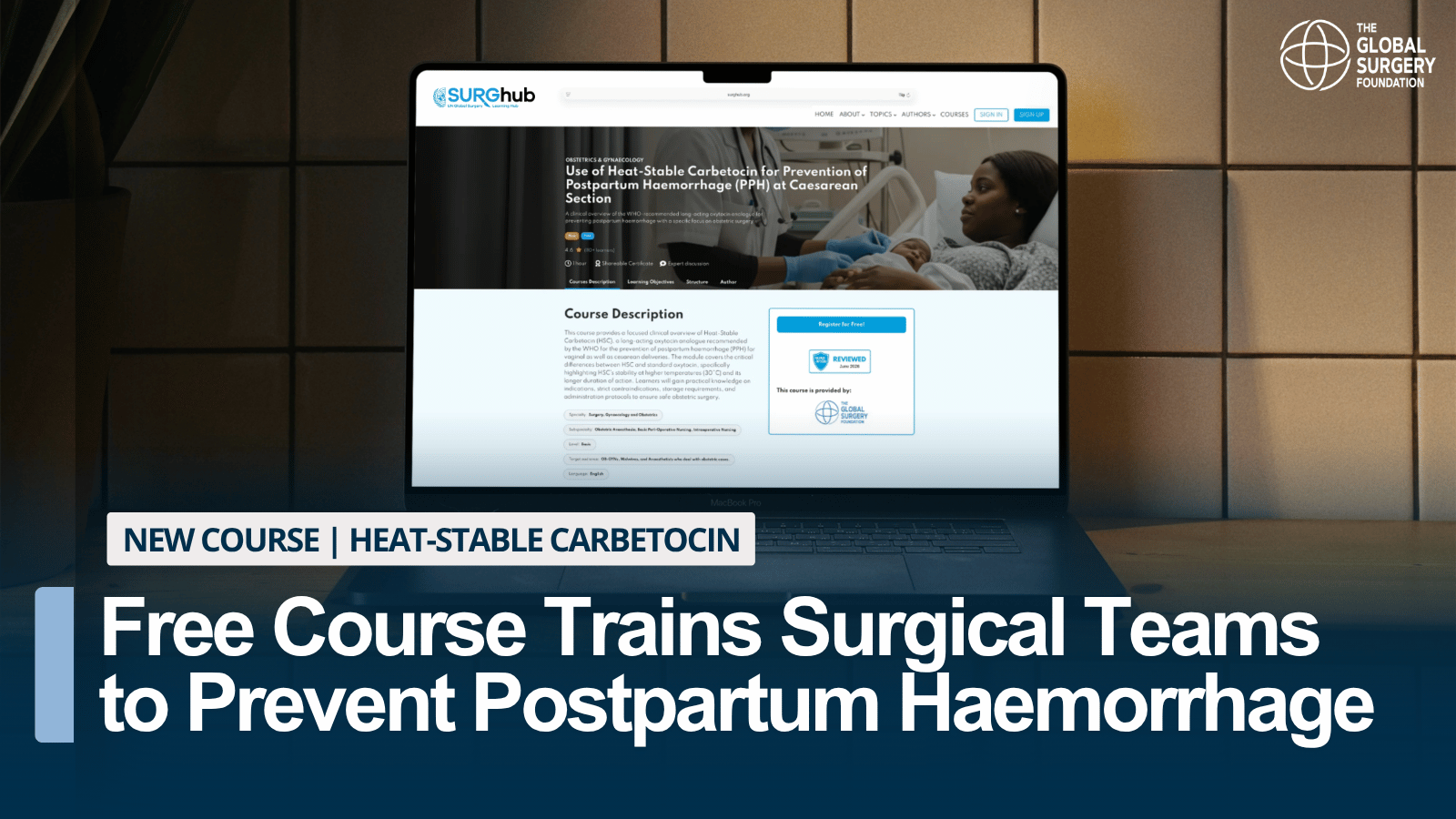
The new course is available free on SURGhub to health workers in over 200 countries and territories.
Postpartum haemorrhage (PPH) remains one of the leading causes of maternal death worldwide, accounting for around 32% of all maternal deaths related to cesarean section and much of that burden falls on facilities where refrigeration is unreliable and the quality of oxytocin cannot be guaranteed.
In its latest PPH guidelines, the World Health Organization recommends heat-stable carbetocin for preventing PPH after all births, including caesarean section. In the Global Surgery Foundation’s safe caesarean section programmes in Kenya, Nepal and Nigeria, complications linked to PPH are among the most frequent problems facilities report. Getting the medicines on the WHO Model List of Essential Medicines into those facilities matters. So does using them correctly once they arrive.
“Effective prevention is essential to reducing maternal mortality and morbidity, particularly in areas where resources and infrastructure pose daily challenges”
A new course on SURGhub addresses the second of those, for women who need a caesarean section. Use of Heat-Stable Carbetocin for Prevention of Postpartum Haemorrhage (PPH) at Caesarean Section is a short clinical module developed by the Global Surgery Foundation. It is available on SURGhub to more than 63,000 health workers in over 200 countries and territories.
“Effective prevention is essential to reducing maternal mortality and morbidity, particularly in areas where resources and infrastructure pose daily challenges,” says Dr. Jean Chamberlain, Clinical Obstetrics Lead at the Global Surgery Foundation.
A uterotonic that does not need a fridge
Heat-stable carbetocin is a long-acting oxytocin analogue included on the WHO Model List of Essential Medicines. Unlike oxytocin, it does not require refrigeration and remains stable for up to 48 months at 30°C. It has a similar onset of action to oxytocin but a half-life around eight times longer, so a single standard dose provides a prolonged duration of uterine contraction and may reduce the need for additional uterotonics.
“Access to the medicines that can save women who need a caesarean section should be a priority, and with access must come correct use”
Safe use starts with knowing when not to use it
The course sets out the uterotonics currently approved for PPH prevention and where heat-stable carbetocin fits within WHO guidance. It covers indications and the strict contraindications, in particular that the drug must never be used for labour induction or augmentation, or before the birth of the baby. It closes with practical guidance on dosing, timing, administration and storage.
One course for the whole surgical team
The course forms part of the Global Surgery Foundation’s work with local partners in Kenya, Nepal and Nigeria to improve access to timely, safe and respectful obstetric care. That work combines training and mentorship for surgical teams with facility readiness, community engagement, evidence generation and networks of care for women and newborns.
“PPH prevention is critical for all births, and access to the medicines that can save women who need a caesarean section should be a priority. With access must come correct use by health professionals, to maximise quality along the continuum,” says Dr. Mélanie Samson, Senior Technical Officer, Women’s Health at the Global Surgery Foundation. “Our approach with local partners and surgical teams is to strengthen good practice for all births, including for mothers who need a caesarean section. This course raises awareness and gives every member of the team a shared understanding of how to prevent one of the most dangerous complications.”
Designed for health professionals in obstetrics, anaesthesia, midwifery and perioperative nursing, the course takes less than one hour to complete. It combines short video introductions, interactive material and pre- and post-course assessments, and issues a shareable certificate on completion. It is included for free with a SURGhub account.
Enrol at: surghub.org/course/heat-stable-carbetocin-for-prevention-of-pph-at-c-section
About SURGhub
Launched in June 2023, SURGhub, the United Nations Global Surgery Learning Hub, is a joint initiative of the Global Surgery Foundation and the United Nations Institute for Training and Research (UNITAR), supported by the Royal College of Surgeons in Ireland and in association with the Johnson & Johnson Foundation. It offers free, peer-reviewed courses in surgery, anaesthesia, obstetrics and gynaecology, perioperative care and non-technical skills, developed by more than 30 partner organisations. SURGhub now hosts more than 140 courses and has more than 63,000 registered learners in over 200 countries and territories, with more than 34,000 certificates issued.
Your Next Article
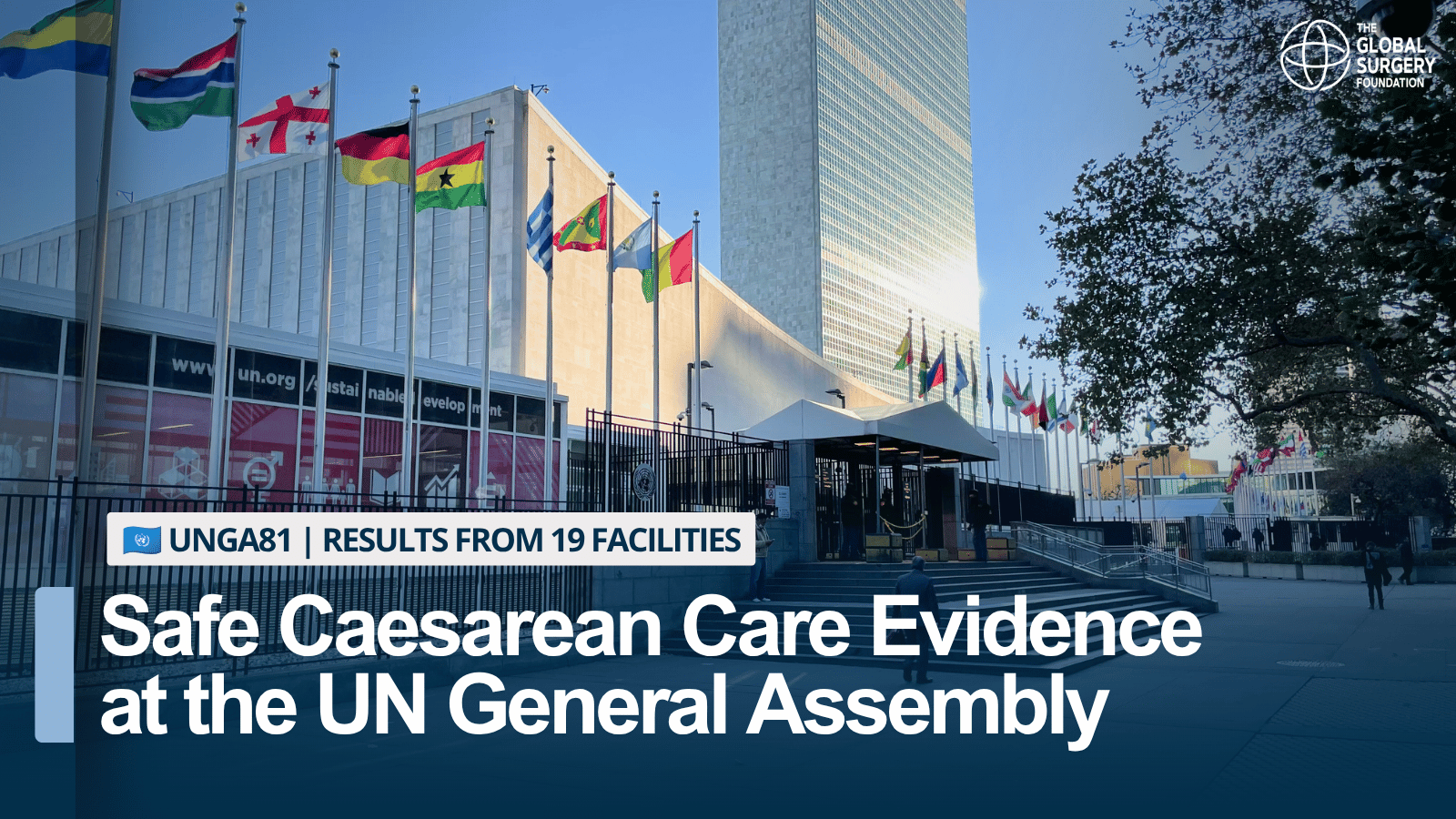
The Global Surgery Foundation's Safe Caesarean Section projects in Nepal, Kenya and Nigeria are expanding from 19 to 31 health facilities. Ahead of two UN General Assembly events on maternal survival, here is what the model has changed so far. Read article