GSF Takes the Evidence On Safe Caesarean Care to UNGA
The Global Surgery Foundation's Safe Caesarean Section projects in Nepal, Kenya and Nigeria are expanding from 19 to 31 health facilities. Ahead of two UN General Assembly events on maternal survival, here is what the model has changed so far.
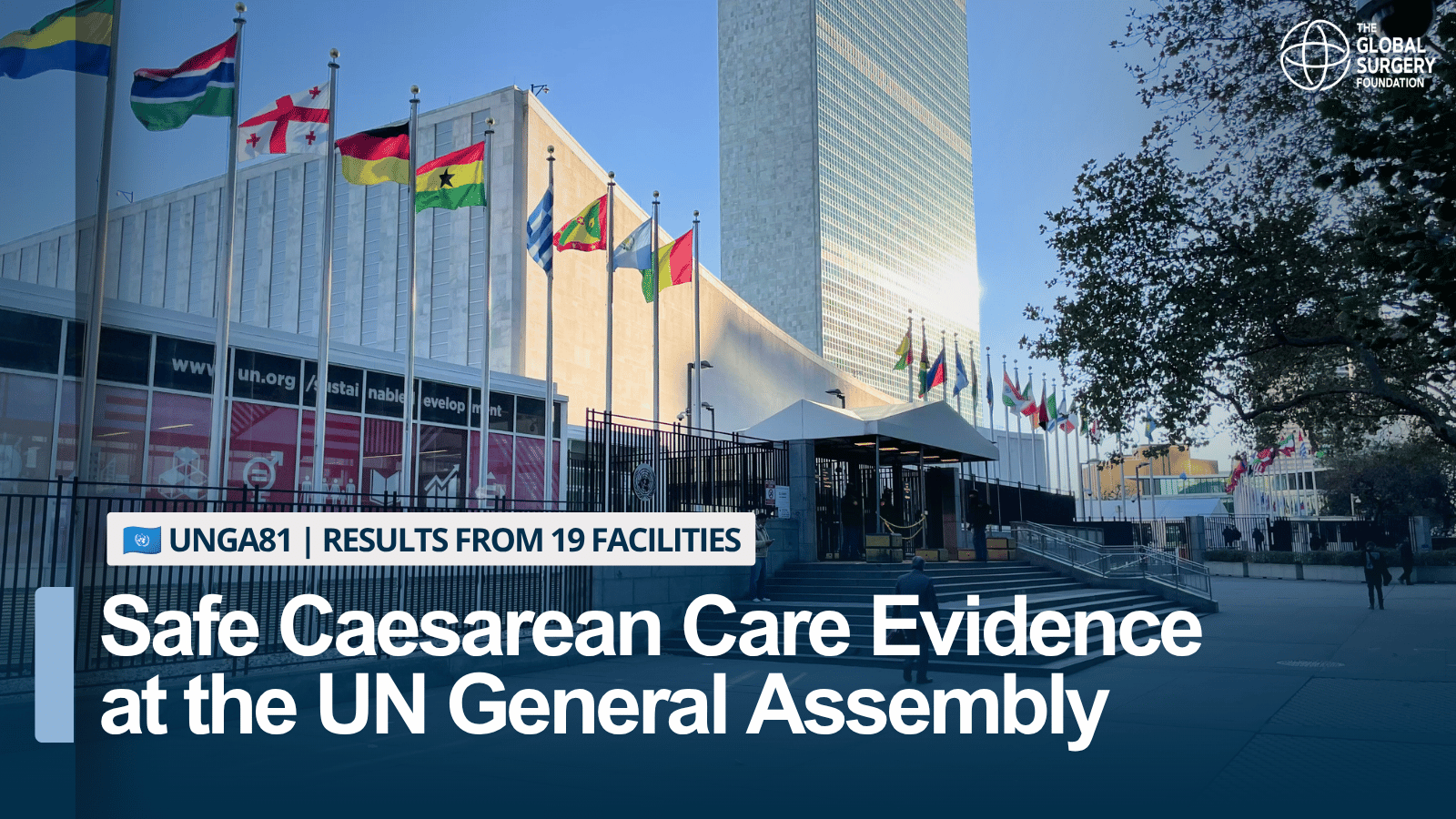
UN Headquarters in New York. GSF is presenting results and outcomes from 19 facilities at two UNGA81 events on maternal survival.
Since the creation of the Women’s Health Programme in 2023, the Global Surgery Foundation's Safe Caesarean Section (Safe CS) portfolio has launched three flagship projects in Nepal, Kenya and Nigeria. Together they have worked to improve the safety and quality of obstetric care for more than 150,000 mothers and newborns.
Based on a comprehensive model combining training, mentorship, facility readiness and community engagement for safe surgical care along the maternal health continuum, the three projects are now entering a new chapter through expansion in close collaboration with local partners, from 19 to 31 health facilities in total across Nepal, Kenya and Nigeria.
One to two years after launch, adherence to the WHO Surgical Safety Checklist across the three projects stands at 91%, above the 90% target. Results vary by context, as the stories below show, but the model is changing practice in the operating theatre and improving clinical outcomes for mothers and newborns.
As world leaders gather in New York for the UN General Assembly, GSF is bringing this evidence to two events dedicated to maternal survival:
Why safe obstetric care is a frontline issue
Caesarean sections, when they are appropriate, safe, timely and respectful, save lives at scale. Closing the quality gap in facility-based care around the time of birth could prevent close to 100,000 maternal deaths a year and avert up to 70% of newborn deaths (1,2).
Safe, high-quality surgical care is also a matter of equity. Women in low- and middle-income countries are 50 to 100 times more likely to die following a caesarean than women in high-income settings, most often from postpartum haemorrhage, infection or pre-eclampsia. Too many newborns also miss out on basic practices after birth, from early breastfeeding and delayed cord clamping to skin-to-skin contact — practises that are often overlooked when the birth is by caesarean.
This is the gap GSF's Safe CS model is designed to close. It combines training for surgical teams with continuous mentorship, stronger facilities and data systems, and community follow-up, so that women are still supported after they return home.
Evidence from three different realities
GSF and its local partners have adapted this integrated model to three contexts that span the range of the global obstetric care challenge:
Nepal has one of the highest and fastest-rising caesarean rates in the region, so the priority is the quality and safety of an already common procedure.
In Koshi Province, working closely with the Nepal Society of Obstetrics and Gynaecologists (NESOG) and in coordination with Nepal’s Ministry of Health and Population, the project has expanded from 4 to 6 facilities. Surgical teams have raised adherence to the WHO Surgical Safety Checklist from 0% to over 99%, with early breastfeeding after caesarean section rising from 19% to 96%. Eight in ten women now receive a follow-up check within 30 days of their caesarean, from a baseline of none.
Entering its third year, the Safe CS model will pilot at Paropakar Maternity and Women's Hospital in Kathmandu, the largest maternity hospital in Nepal, a chance to show how the approach can be scaled further for mothers and newborns.
Read the story of Smarika Raut, a post-operative gynaecology nurse and OSSC mentor at Koshi Hospital.
“Surgical checklist use went from 0% to over 99%”
Kenya still faces systemic challenges in the quality of surgical care. In Nakuru County, the project is implemented with Jhpiego and AIC Kijabe Hospital, in close collaboration with Kenya’s Ministry of Health and the Nakuru County Government, and is scaling from 5 to 10 facilities.
In its first year, the project reached 42,452 women and newborns across five facilities. About six in ten women now receive a seven-day post-caesarean follow-up, from a baseline of none. There is also a strong associated improvement in newborn health: admissions to the newborn unit have fallen from a baseline of 20.1% to 11.1% in the last reported quarter, a reduction of about 45%, and neonatal mortality is down by more than 70%.
The GSF team travelled to Nakuru in July 2026 for a clinical skills workshop with the surgical teams from the five new facilities, joined by trainers and mentors from the first cohort. Peer training is now led locally and will extend through the hub-and-spoke mentorship model.
Read the story of Judy Nyambura Wachira, a perioperative nurse and theatre-in-charge at Gilgil Hospital.
“Neonatal mortality is down by more than 70%”
Nigeria still carries one of the highest burdens of maternal mortality worldwide. In Kano, GSF is supporting ACEPHAP at Bayero University, in collaboration with the Kano State Ministry of Health, to strengthen access to safe caesarean sections along the continuum of care across 10 facilities, some of which face shortages of infrastructure and equipment.
One year after the first training launched the hub-and-spoke model, the 10 facilities have provided continuous mentorship to 56 surgical team members and cascaded safe-surgery practices, reaching more than 70% adherence to the WHO Surgical Safety Checklist. Since launch, the project has reached 42,600 women and newborns across 10 facilities. In terms of impact, surgical site infections after caesarean have fallen from 9.2% to 4.8%, a 48% reduction against a 30% target.
In July, the teams completed leadership training, a hybrid course on SURGhub that culminated in a two-day workshop where they designed their own quality improvement plans for safer caesarean care. GSF and ACEPHAP are now preparing to expand to five further facilities in Jigawa State, with renovation funding secured.
Read the story of Dr. Olusegun Samuel Spaine, Chief Medical Officer at Mariya Sunusi Maternity Hospital in Kano.
“Surgical site infections have fallen by 48%”
It’s achievable at scale
As GSF opens a new chapter on the back of the new wave of funding announced at the World Health Assembly earlier this year, there is a clear window to take this approach to scale. The results have already been presented at GSF’s side event at the 79th World Health Assembly in Geneva in May, at the SAFOG-NESOG conference in Kathmandu in April and at the ICM conference in June. Working through its network and aiming to support integration of the Safe CS model at national level, GSF will continue to engage stakeholders and broaden the work with local partners.
At UNGA this year, the message from GSF's Safe CS projects is simple: safe, respectful and timely caesarean care is achievable at scale, in radically different health systems, when training, facility readiness, data and community engagement move together. More than 150,000 mothers and newborns already know what that looks like in practice.
About the Global Surgery Foundation
The Global Surgery Foundation (GSF) is the lead global platform for surgical care systems strengthening. Operating on a UN-incubated, neutral platform, GSF mobilises world-class clinical, policy, and funding expertise to support local leaders in building surgical systems that are efficient, resilient, and sustainable. Through SURGfund — the world's first and only pooled financing mechanism for surgical care — and SURGhub — the UN Global Surgery Learning Hub — GSF is translating catalytic investment into measurable, lifesaving impact across low- and middle-income countries.
Your Next Article
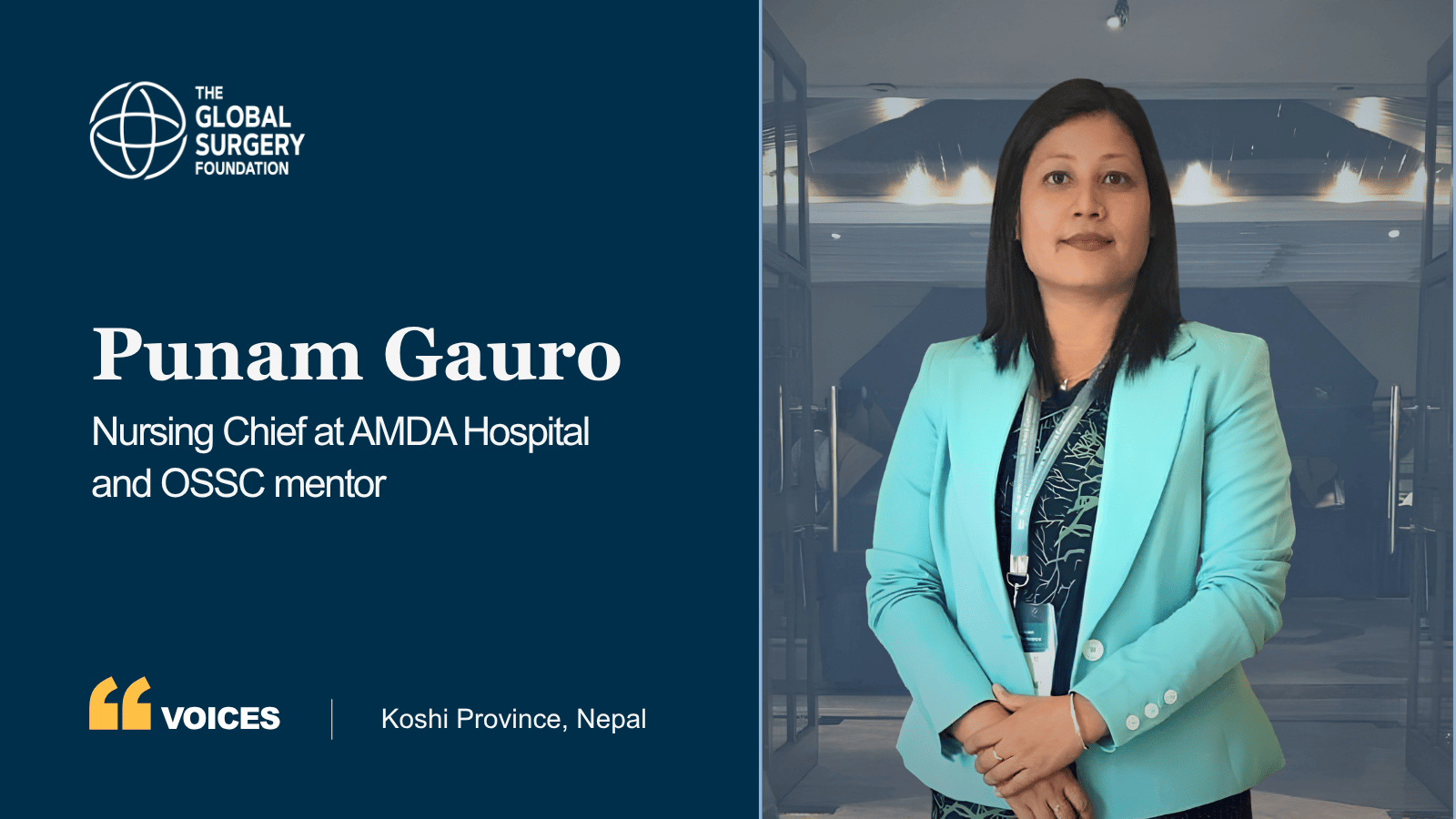
Punam Gauro, Nursing Chief at AMDA Hospital in Damak, Nepal, and a mentor in the Nepal OSSC project, describes a career spent turning training into impact for mothers and newborns, and remembers the mother whose recovery still shapes every lesson she gives. Read article