The Doctor Who Refuses to Do Nothing in Kano, Nigeria
In the latest instalment of Voices of Global Surgery, Dr. Olusegun Samuel Spaine, Chief Medical Officer in charge of Mariya Sunusi Maternity Hospital in Kano, Nigeria, explains why his answer to delay and scarcity is always to act, and remembers the patient he gave his own blood to try to save.
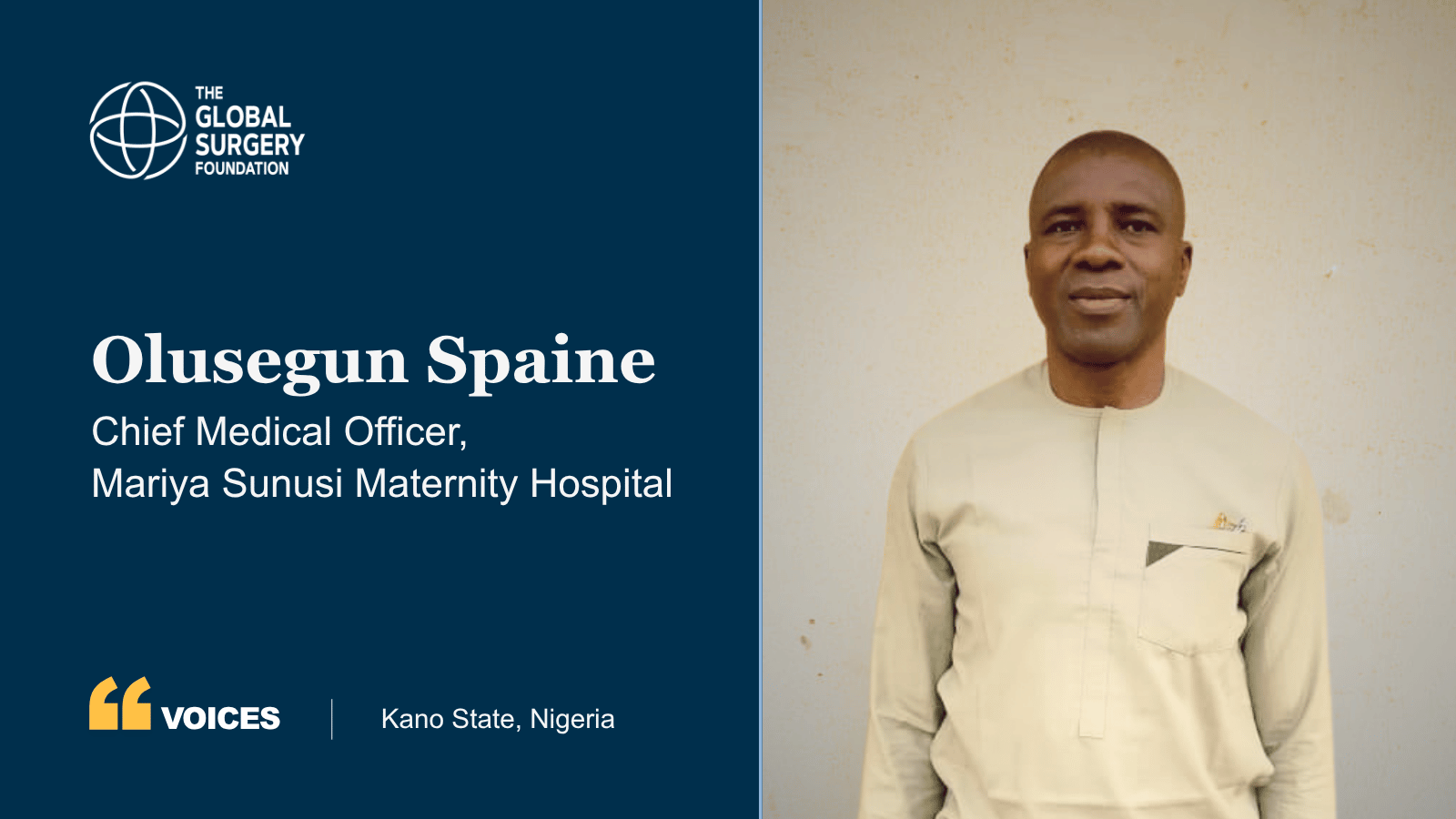
Health workers around the world see where surgical care falls short. In Voices of Global Surgery we highlight their stories.
Kano, Nigeria — Kano is one of West Africa’s oldest trading cities, a place where the markets that once drew trans-Saharan caravans now serve one of Nigeria’s largest urban populations. At Mariya Sunusi Maternity Hospital on Katsina Road, Dr. Spaine leads a team providing antenatal and postnatal care, labour and delivery services, emergency obstetric surgery and newborn care.
He has spent his career in the city’s public facilities, among them Sheikh Muhammad Jidda General Hospital, which he led before taking charge here. His own summary of the job takes four words: “It’s service to humanity.” The days are long and unpredictable, but he speaks of them with appetite. “It’s lively,” he says, “in the sense that you can see you have a role to play in saving lives.”
When the Delay Is the Danger
His hospital is one node in a wider picture. Across Nigeria, most surgical care is concentrated in larger centres, while secondary and district facilities like his carry much of the emergency obstetric load with fewer specialists and less equipment. It is often at this level, closest to where women live, that the gap between needing an operation and safely receiving one is widest.
Obstetric emergencies leave little room for waiting, and yet waiting is often exactly what circumstances impose. “When you have a patient that you need to take care of immediately, and there’s this delay one way or the other, it’s very frustrating,” he says. Many of those delays trace back to limitations beyond any clinician’s control. Secondary facilities carry out caesarean sections and manage obstetric emergencies with the resources they have, and sometimes, he says, the equipment and the opportunity to act are not there when they are needed.
In those situations the team weighs urgency against safety, sometimes referring a woman to another facility, and sometimes providing the safest care possible with what is at hand. “We don’t want to lose the patient’s life, and we don’t want to take unnecessary risks,” he says.
“Too little, too late” in one place, “too much, too soon” in the next.”
The stakes of every such delay are visible in the numbers. Nigeria accounts for more maternal deaths than any other country, an estimated 28.7% of the global total, and across Africa the risk of dying after a caesarean section is 50 times higher than in high-income countries. In northern Nigeria, caesarean section rates swing from under 2% at some facilities to over 37% at others; the problem is “too little, too late” in one place and “too much, too soon” in the next, and everywhere the operation must be made safe. Kano is where the Making Caesarean Section (CS) Safe in Kano project has set out to change those odds.
One Pint of Blood
Some patients never leave a clinician. Early in his career, while still working as a nursing officer, Dr. Spaine cared for a woman who arrived with a ruptured uterus after many previous pregnancies. The blood bank held a single unit of compatible blood, nowhere near enough for a woman bleeding as heavily as she was. He rolled up his own sleeve; by chance they shared the same blood group, and his donation went straight to her. Despite the transfusion and everything the team could do, she died in theatre. “It remained with me because that was the first patient I lost on the operating table,” he says.
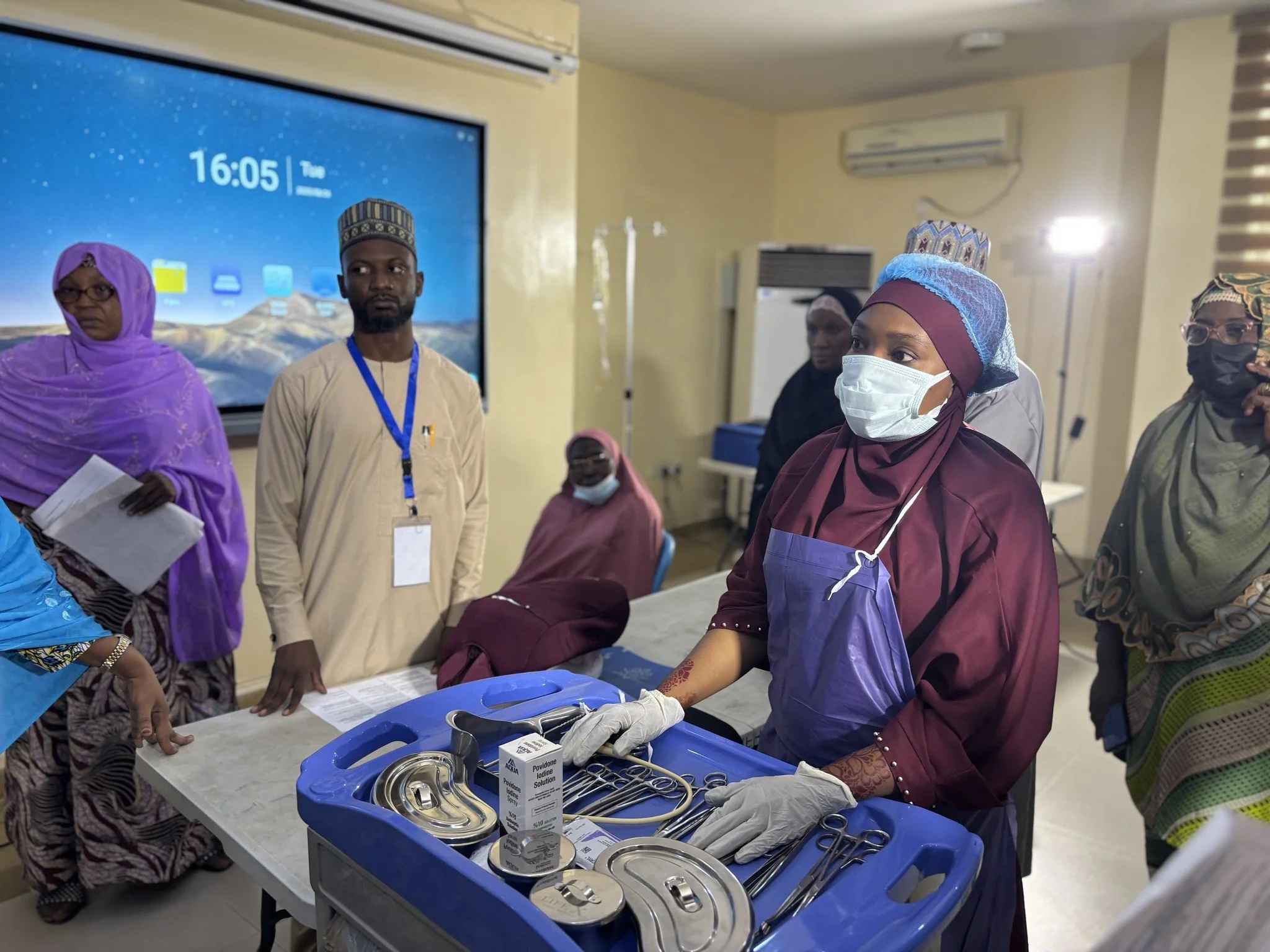
Surgical teams from facilities across Kano State train on instrument preparation and sterility under the Making CS Safe in Kano project.
The Consent That Saved Two Lives
Years later, another case showed him what persistence can change. A woman with placenta praevia needed an emergency caesarean section, but her family was reluctant to give consent. Rather than giving up, he and his team took the time to counsel them carefully, explaining the danger of waiting. They agreed to proceed. “Mother and baby are still alive today,” he says. For Dr. Spaine, the two cases belong together: obstetric care demands clinical skill, but it demands communication, trust and the will to make difficult decisions under pressure in equal measure. That conviction is close to the spirit of the Kano project itself, which prioritises respectful, women-centred care built on teams that plan and decide together.
Simple Changes, Drastic Results
Through training delivered under the Making CS Safe in Kano project, led by ACEPHAP at Bayero University with the support of the Global Surgery Foundation and running across ten facilities in Kano State, where the first interventions began in August 2025, he and his team have adopted the WHO Surgical Safety Checklist and strengthened infection prevention bundles: timing prophylactic antibiotics correctly, implementing vaginal cleansing, improving skin preparation, simplifying wound dressing, and ending the unnecessary use of antibiotics after surgery. The checklist and best practices learned during the training, he says, “encompass everything that you need to do to keep a caesarean section safe.”
“It has reduced our surgical site infections drastically.”
“It has reduced our surgical site infections drastically,” he says of the new routine. As Chief Medical Officer, he pairs the clinical changes with what he calls collective leadership. “I involve every member of the facility,” he says. Improving surgical care, he believes, is not the work of one person; it is a commitment the whole facility owns.
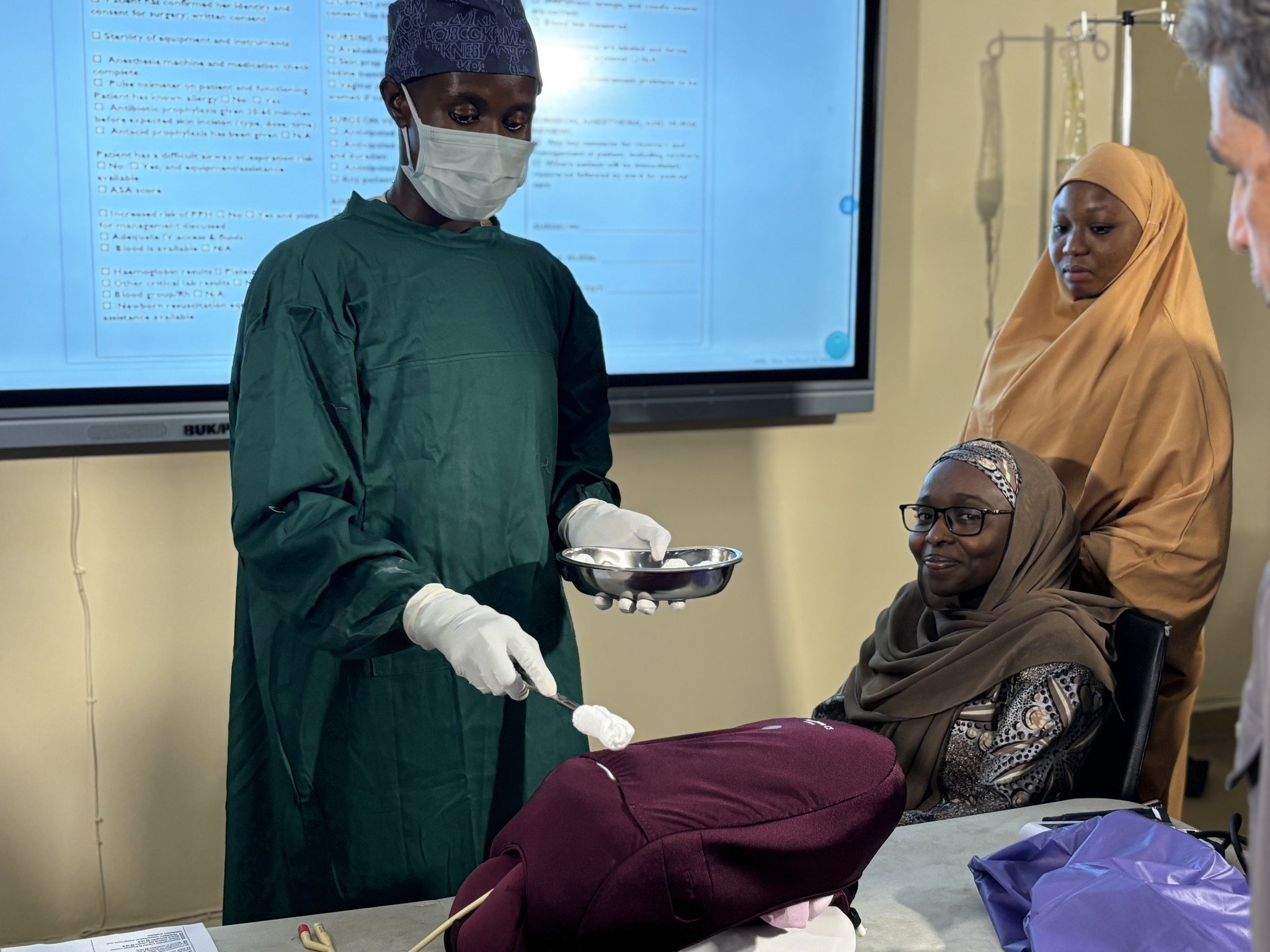
Skin preparation demonstrated during caesarean section simulation training, with the surgical safety checklist projected behind.
Learn, Unlearn, Improve
Asked what keeps him going when the shortages bite, his answer is part optimism, part refusal. “What keeps me going is knowing there is a light at the end of the tunnel,” he says. “I don’t believe in doing nothing. Let us do something.”
“I don’t believe in doing nothing. Let us do something.”
His message about what healthcare in his community needs most begins not with buildings or machines but with people. “We need more training and retraining so that we can learn, unlearn what we have learned before, and continue improving our practice,” he says. Teams trained under the project are expected to pass the training on, with the aim of significantly reducing CS-related complications across the participating facilities, and that, for him, is the point: every new skill learned and every colleague empowered moves his community a step closer to safer maternal and newborn care.
Voices of Global Surgery
Meaningful progress requires listening to those who know it best: the people with lived experience. Their unique expertise is irreplaceable when it comes to understanding and fixing the gaps in quality surgical care. In this series, we highlight the voices of those most affected to explore the critical barriers, challenges, and opportunities in achieving safe surgical care for all.
About the Project
The Making Caesarean Section (CS) Safe in Kano project is a targeted intervention to improve maternal and perinatal outcomes through safe, timely, appropriate, and respectful CS care for over 27,000 women giving birth each year in Kano, Nigeria. The project adapts a hub-and-spoke mentorship model across ten facilities in Kano State to build the capacity of interdisciplinary surgical teams, including training on the CS-adapted Surgical Safety Checklist, evidence-based surgical techniques, teamwork and communication, and a culture of patient safety. It is implemented by ACEPHAP at Bayero University with the support and coordination of the Global Surgery Foundation (GSF), in collaboration with the Kano State Ministry of Health.
globalsurgeryfoundation.org/safe-cs-kano
About the Funding & Implementation
The Kano CS project is supported by SURGfund, the pooled financing mechanism of the Global Surgery Foundation (GSF) and the world’s only catalytic fund for strengthening surgical care systems. This project receives additional support from the Republic and Canton of Geneva, Switzerland. In addition to SURGfund financing, GSF provides strategic implementation support to ensure long-term sustainability.
Your Next Article
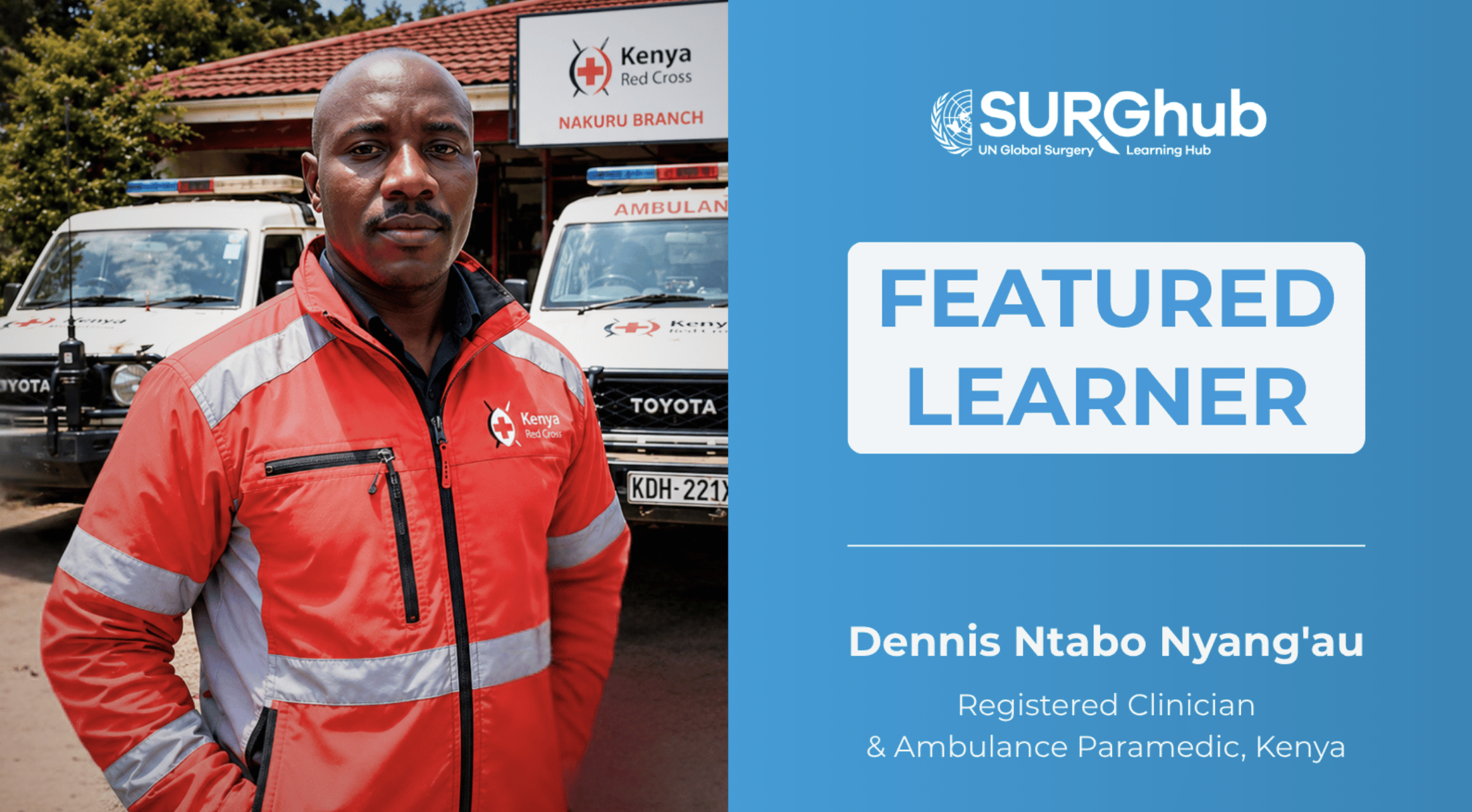
From the frontlines of emergency care in Nakuru, Mr Dennis Ntabo Nyang'au shares how systematic clinical training provides a vital framework for saving lives in Kenya’s most unpredictable environments. Read article.