The Matron Teaching Teams to Save Mothers in Damak, Nepal
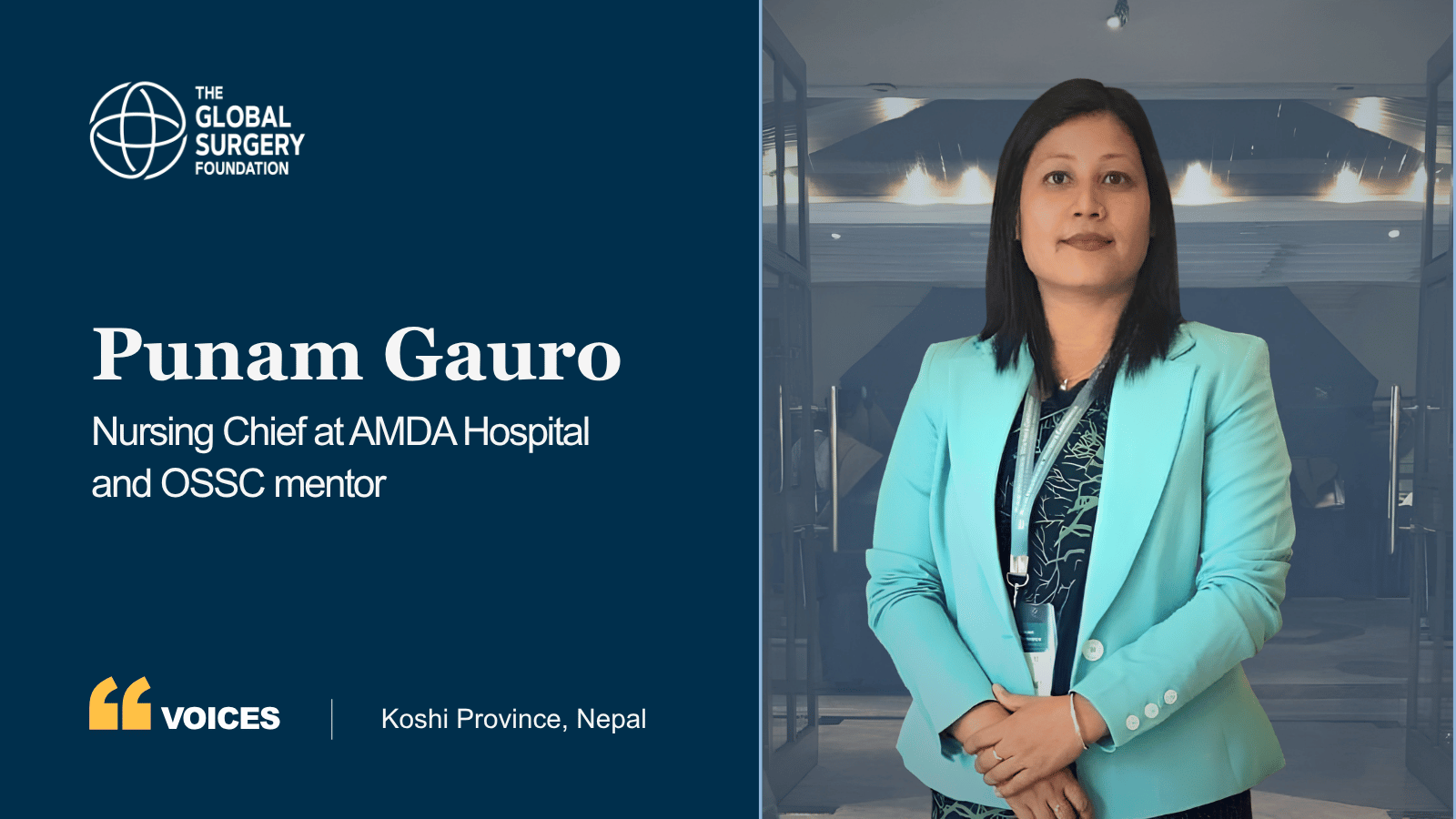
Punam Gauro, Nursing Chief at AMDA Hospital in Damak, Nepal, and a mentor in the Nepal OSSC project, describes a career spent turning training into impact for mothers and newborns, and remembers the mother whose recovery still shapes every lesson she gives.
Health workers around the world see where surgical care falls short. In Voices of Global Surgery we highlight their stories.
Damak, Nepal — Ask Punam Gauro what she does and the answer spans three jobs at once. “I lead, teach and inspire healthcare teams to provide safe, respectful and evidence-based care that saves the lives of mothers and newborns,” she says. Nursing Chief, trainer and mentor: for her, the three are one profession.
Punam is the Nursing Chief, or Matron, of AMDA Hospital in Damak, a busy market town on the East-West Highway in Jhapa, Nepal’s easternmost Terai district, where the plains are lined with tea gardens and rice fields. She is also a mentor in the Nepal OSSC project, travelling to other facilities to build the skills, confidence and teamwork of the people who care for mothers and newborns. “What makes my work meaningful is seeing knowledge transformed into action,” she says, “whether it is a provider successfully managing a postpartum haemorrhage, resuscitating a newborn, or offering compassionate care to a mother in need.”
When Routine Becomes an Emergency
Her day begins with the overnight picture: patient status, staffing needs and any emergencies that occurred while she was away. Then come rounds through the maternity, neonatal and inpatient units. The rhythm rarely holds. “One moment I may be reviewing reports or mentoring a nurse on documentation, and the next I am supporting the team during a postpartum haemorrhage or a neonatal resuscitation,” she says. In those moments, teamwork, communication and preparation become critical, and watching a well-trained team respond confidently and save a life is one of the most rewarding parts of her work.
“Watching a hesitant nurse gain confidence in managing emergencies is incredibly fulfilling.”
Teaching runs through everything. She conducts simulation-based training, bedside coaching and mentoring sessions for nurses and skilled birth attendants, and performs obstetric ultrasound scans to assess fetal growth, confirm presentation and detect complications early. “Watching a nurse who was initially hesitant gain confidence in managing obstetric and neonatal emergencies is incredibly fulfilling,” she says. Every training session, she believes, has the potential to improve outcomes long after the class ends. The most memorable moments are the simplest ones: a newborn’s first cry after a difficult birth, a mother recovering from a life-threatening complication, a family taking a healthy baby home.
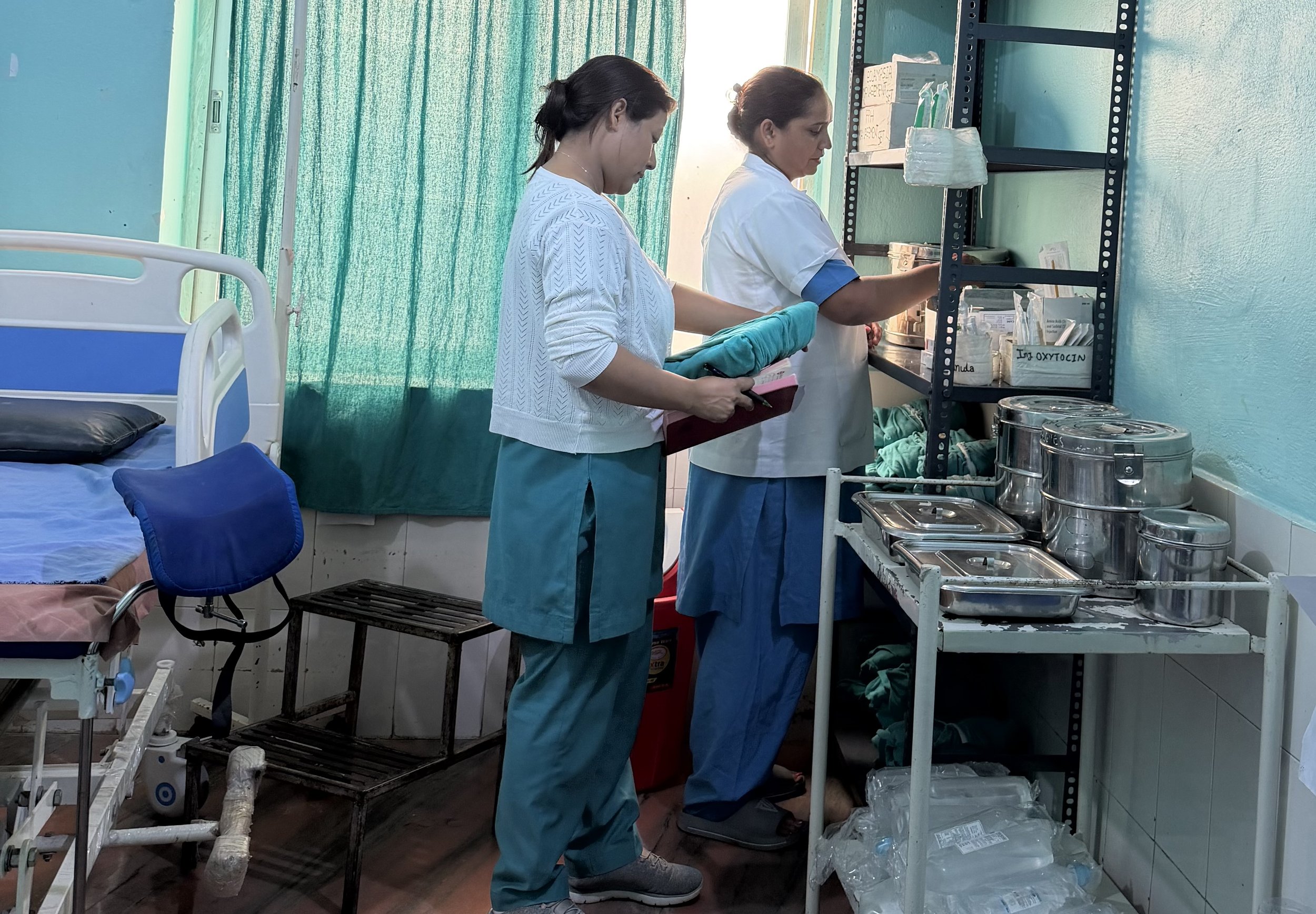
Punam (in green, carrying her notebook) reviews the readiness of the labour room and operating theatre with the nursing team, from emergency drugs to sterile instruments and infection prevention.
The Difference Between Life and Death
Punam entered nursing in 2011, drawn to caring for women and newborns during the most critical moments of their lives. Early in her career she saw how timely, skilled and compassionate care could mean the difference between life and death, above all while caring for a woman with severe postpartum haemorrhage in a setting with very limited resources. Watching the team pull that patient through showed her what competent frontline health workers can mean for families and communities.
“What makes my work meaningful is seeing knowledge transformed into action.”
She was equally shaped by the mentors and senior nurses who combined clinical excellence with a dedication to teaching others. Their example led her to become a trainer herself, and over the years, training skilled birth attendants and mentoring health workers have become as meaningful to her as direct patient care. What has kept her on this path is the visible result: mothers returning home safely with their newborns, providers gaining confidence, facilities improving the quality of care they give.
Working With What They Have
AMDA Hospital serves a population for whom access to specialised surgical services can be limited, especially women and newborns needing emergency obstetric and neonatal care. The team works within real constraints: shortages of trained personnel, limited opportunities for advanced training, and infrastructure gaps such as inadequate space for patient care and recovery. Reaching specialised equipment and services can demand careful planning and, at times, creative problem-solving; in an emergency, every member of the team must be ready to step beyond their routine responsibilities.
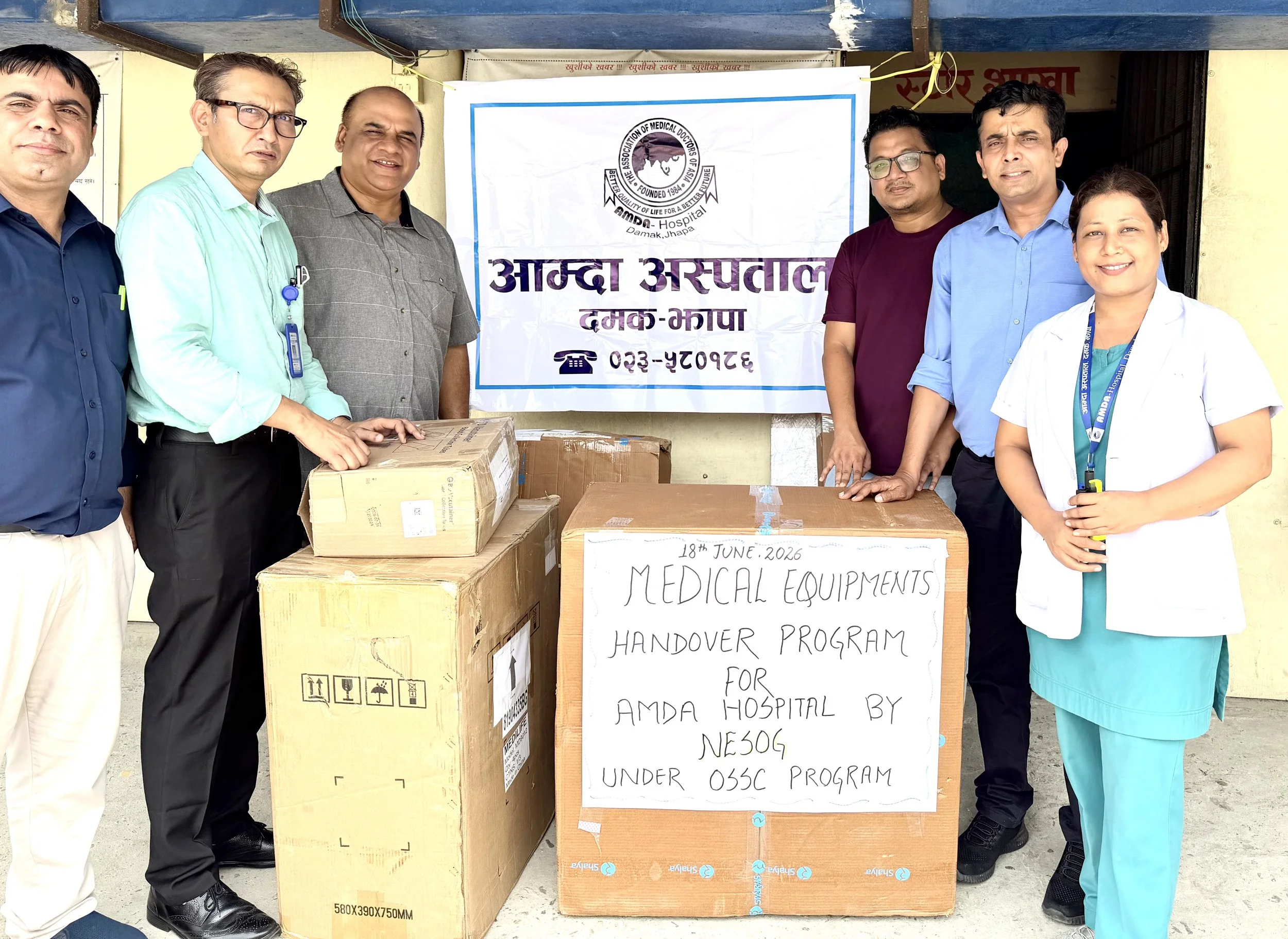
Medical equipment arrives at AMDA Hospital in Damak: a handover by NESOG under the OSSC project, June 2026. Punam stands on the right.
What makes it work is the team itself. Nurses, doctors, anaesthetists, operating theatre staff and support personnel collaborate closely, often under pressure, held together by strong communication, mutual respect and a shared commitment to patient safety. “When a mother survives a life-threatening complication, when a newborn who required resuscitation begins to cry, or when a family leaves the hospital healthy and hopeful, it reminds me why this work matters,” she says.
Hours When the Outcome Was Uncertain
The patient who has stayed with her longest arrived in critical condition after a prolonged labour and severe postpartum haemorrhage. She had already lost a great deal of blood and was deteriorating fast. As nursing lead, Punam worked to make every minute count, coordinating emergency surgical and obstetric care while also supporting a frightened family waiting outside, uncertain whether their loved one would survive.
After hours of intensive care and monitoring, the mother gradually stabilised. A few days later, Punam saw her holding her healthy newborn and smiling. “The relief and gratitude on her face, and in her family’s eyes, is something I will never forget,” she says. Clinically, the case reinforced the value of preparedness, teamwork and regular emergency drills. Emotionally, it taught her that behind every clinical case is a family, a story, and a future that depends on the care provided. “Even today, whenever I teach obstetric emergency management or mentor staff, I think about that mother and her baby.”
“A few days later, the mother was holding her healthy newborn and smiling.”
Training the Team, Not Just the Task
Punam has taken part in many clinical trainings over the years, from skilled birth attendant courses onwards, and most taught individual skills: how to perform each task correctly. The OSSC project takes a different approach. Its simulation exercises and team-based drills train the whole team together, building structured communication, clear roles, rapid assessment and a coordinated response; the things that save lives when a haemorrhage, eclampsia or a newborn resuscitation unfolds. It changed how she practises, and just as much how she trains others.
“Most trainings teach individual tasks; the OSSC project trains the team.”
As Nursing Chief she has turned those lessons into on-site coaching, drills and mentorship, and the results are visible: stronger adherence to clinical protocols, faster response times in emergencies, and closer collaboration between the maternity, operating theatre and newborn care teams.
The results reach beyond her own hospital, too: in 2025, 27,242 women and newborns were reached with improved surgical care through the OSSC project. The deepest shift was in mindset. “Quality care is not only about technical skills; it is also about creating systems where every team member feels empowered to speak up, communicate effectively, and work together toward the common goal of saving lives.”
Not a Lack of Technology
When the work becomes overwhelming, Punam returns to why she chose it: to save lives, support families and make a difference in the moments when people need care most. She draws strength from colleagues who remain committed despite limited resources, from her family, and from her faith in the value of service. Above all she is motivated by the growth she sees in health workers, because when a nurse gains confidence or a team performs well in a crisis, the impact reaches far beyond a single patient.
Her message to global health leaders and donors begins with a correction. “Delays in accessing safe surgical and emergency care are not simply the result of a lack of technology,” she says. They are linked to workforce shortages, limited training opportunities and fragile health systems; buildings and equipment matter, but sustainable improvement happens when health workers are empowered through continuous training, mentorship and supportive supervision. What needs to change, she argues, is investment in local capacity: frontline providers, simulation-based training, multidisciplinary teamwork, and resources for rural and underserved facilities, through long-term partnerships and locally led solutions.
“A skilled, confident and supported healthcare team can make an extraordinary difference.”
“Every mother who survives childbirth, every newborn who gets a healthy start in life, and every patient who receives timely surgical care represents more than a successful clinical outcome. They represent hope, dignity, and a future. That is why investing in frontline healthcare workers is one of the most powerful investments we can make.”
Voices of Global Surgery
Meaningful progress requires listening to those who know it best: the people with lived experience. Their unique expertise is irreplaceable when it comes to understanding and fixing the gaps in quality surgical care. In this series, we highlight the voices of those most affected to explore the critical barriers, challenges, and opportunities in achieving safe surgical care for all.
About the Project
The Saving Lives of Mothers and Newborns in Nepal: Optimizing Safe Surgical Care project is implemented by the Global Surgery Foundation (GSF) and the Nepal Society of Obstetrics and Gynaecology (NESOG), in coordination with Nepal’s Ministry of Health and Population. The initiative focuses on Koshi Province to reduce maternal and neonatal morbidity and mortality by improving the safety of emergency obstetric surgical care. Through a hub-and-spoke mentorship model, the project empowers local frontline teams to adopt evidence-based clinical practices, the WHO Surgical Safety Checklist, and data-driven quality assurance — ensuring safer caesarean births for every mother and newborn.
globalsurgeryfoundation.org/nepal-ossc
About the Funding & Implementation
The Nepal OSSC project is supported by SURGfund, the pooled financing mechanism of the Global Surgery Foundation (GSF) and the world’s only catalytic fund for strengthening surgical care systems. This project is co-funded by the Else Kröner-Fresenius-Stiftung (EKFS). In addition to SURGfund financing, GSF provides strategic implementation support to ensure long-term sustainability.
Your Next Article
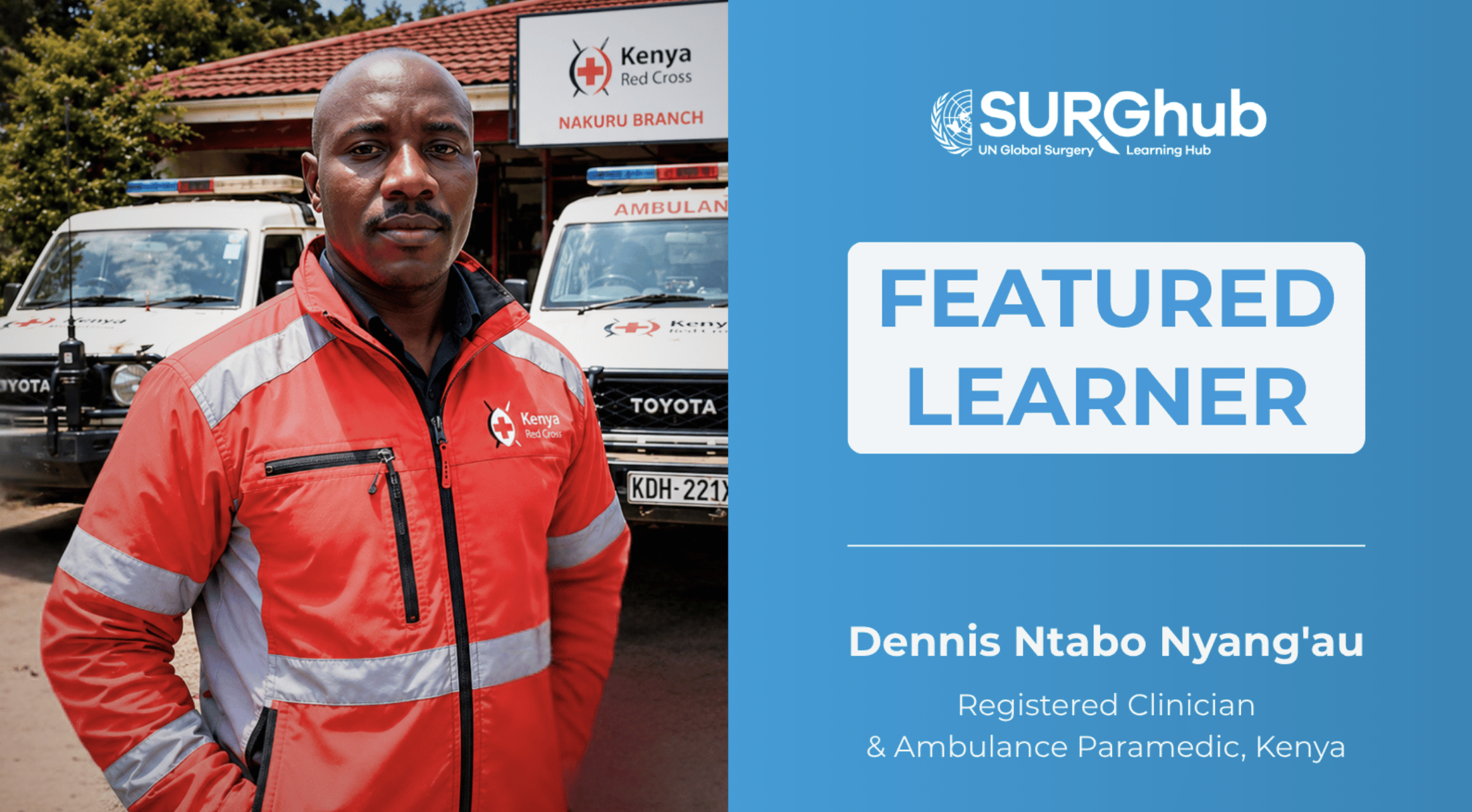
From the frontlines of emergency care in Nakuru, Mr Dennis Ntabo Nyang'au shares how systematic clinical training provides a vital framework for saving lives in Kenya’s most unpredictable environments. Read article.