
Care Continues Even When Resources Fall Short
A recent nursing graduate from Sri Lanka, Mr Oshanda Dinethra, shares how flexible online learning supported him through a critical ICU case, and why he believes nursing depends on knowledge and practical skill working together.
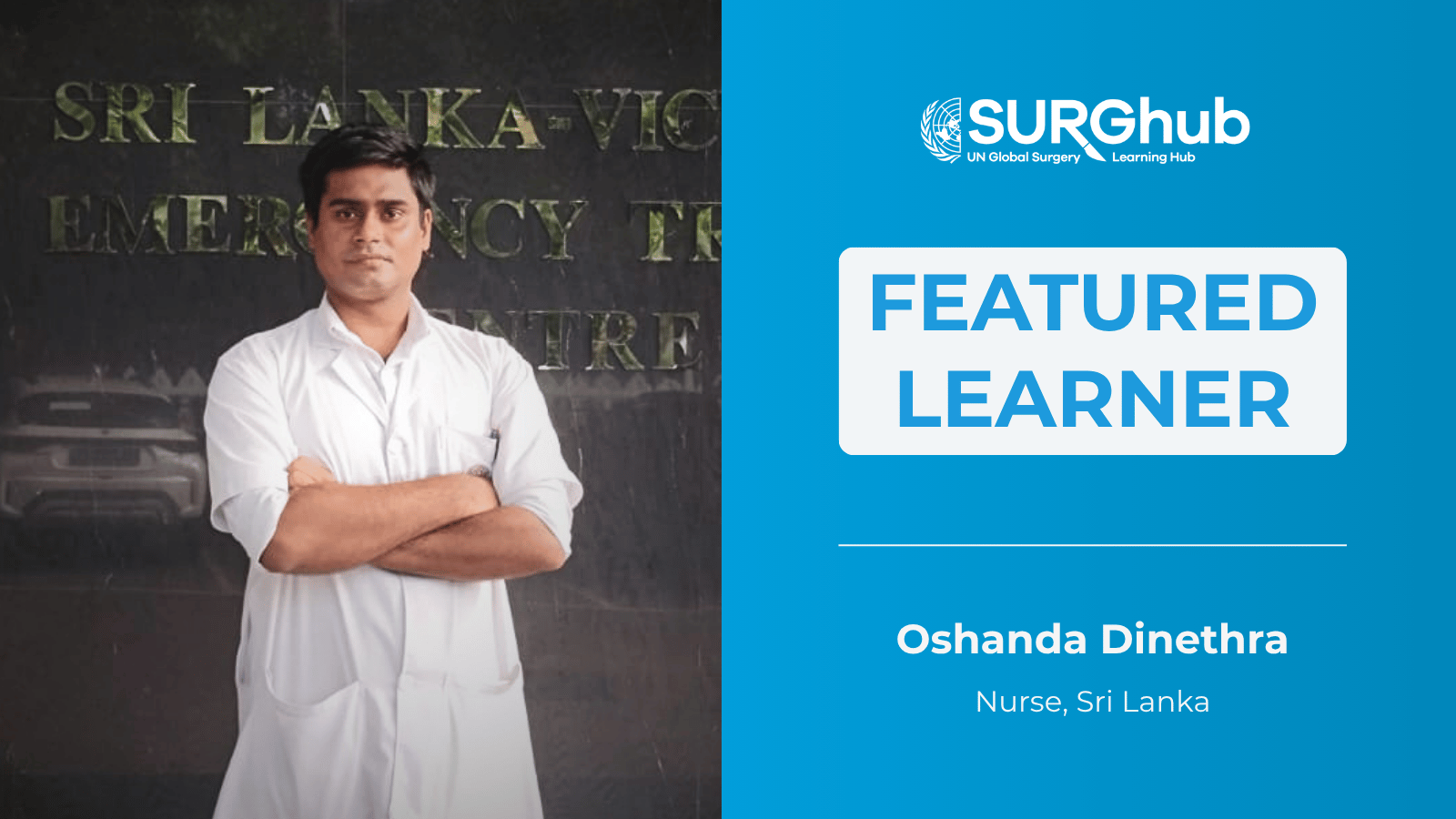
Surgical professionals around the world use SURGhub to improve patient outcomes. In this series we highlight their stories.
Mr Dinethra holds a B.Sc. (Honours) Nursing degree from the Faculty of Allied Health Sciences, University of Ruhuna, including three months of specialised clinical training in the Intensive Care Unit at National Hospital Galle. He now plans to pursue an M.Sc. in Critical Care Nursing, with the aim of working as an ICU nurse within the government healthcare sector.
From early in his training, Mr Dinethra was drawn to the perioperative and surgical side of nursing, encouraged by lecturers and hospital staff nurses who pushed him to keep seeking out new learning opportunities. That encouragement shaped how he now thinks about the profession: that knowledge and practical skill have to develop together, not one after the other.
“Care continues even when resources fall short”
Working in a Sri Lankan clinical setting brings its own pressures — limited staff, equipment, medication, and basic consumables such as dressings are among the most common constraints, and workloads are heavy. Patients sometimes combine traditional remedies with medical treatment, adding another layer for healthcare teams to navigate.
Continuous professional development programmes run by hospitals and Sri Lanka's Ministry of Health help nurses build the skills to work within these constraints.

Mr Dinethra completed his clinical training in the Intensive Care Unit at National Hospital Galle in Sri Lanka, providing critical care nursing to patients requiring close monitoring and multidisciplinary support.
“The flexible learning platform helped me continue improving my knowledge alongside my clinical training”
It was against this backdrop that Mr Dinethra found SURGhub through an online search for surgical education resources. He fit the modules around a demanding clinical schedule, studying in free moments and while travelling. “The flexible learning platform helped me continue improving my knowledge alongside my clinical training,” he says.
The practical value of that learning became clear during his ICU training, when a 45-year-old man was admitted as an emergency following a perforated duodenal ulcer. After an emergency exploratory laparotomy, the patient was transferred to the ICU in septic shock, requiring close monitoring, fluid resuscitation, antibiotic therapy, and strict infection control.
Postoperative wound management and early recognition of sepsis deterioration were the central challenges of his care. Through the knowledge he gained from SURGhub's modules on surgical care principles and infection prevention, Mr Dinethra says, “I was better able to understand the importance of early sepsis recognition, strict aseptic technique, and continuous patient monitoring” — understanding that helped him contribute confidently to nursing interventions and team discussions during the case.
“Continuous learning helps us avoid mistakes and ensures safe, evidence-based nursing practice”
Reflecting on what helped him through that case, Mr Dinethra encourages nursing students to focus their learning on three areas: understanding how to recognise signs of patient deterioration, building strong infection-prevention knowledge, and developing the confidence to contribute within multidisciplinary discussions.
Looking ahead, he hopes to see continued investment in Sri Lanka's critical care and surgical services — in resources, staffing, and training alike. His advice to students starting out is simple: “Continuous learning helps us avoid mistakes and ensures safe, evidence-based nursing practice.”
Oshanda's Top Course
Perioperative Nursing E-Learning Foundational Programme (PeN Programme)
Topic: Safe surgical preparation, infection prevention and postoperative recovery.
Description: This course aims to develop nurses’ theoretical and practical understanding of nursing care delivery in the operating theatre environment.
"Always keep learning and never stop improving knowledge."
- Mr Oshanda Dinethra

About this Story
This profile is part of our Impact Stories series, highlighting how SURGhub learners are applying global surgical standards to local challenges. Our mission is to ensure that high-quality surgical education is a bridge—not a barrier—to saving lives worldwide.
The views and opinions expressed in this article are those of the interviewee and do not necessarily reflect the official policy, position, or standpoint of SURGhub or its partner organisations.
About SURGhub
The United Nations Global Surgery Learning Hub (SURGhub) is the premier training platform in global surgical care. A joint initiative of the Global Surgery Foundation (GSF) and the United Nations Institute for Training and Research (UNITAR), supported by the Royal College of Surgeons in Ireland (RCSI) and implemented in association with the Johnson & Johnson Foundation, SURGhub provides seamless access to quality-assured online courses for frontline surgical care workers in resource-limited settings worldwide. With tens of thousands of learners across over 200 countries and territories, SURGhub is transforming access to lifesaving surgical education.
Your Next Article
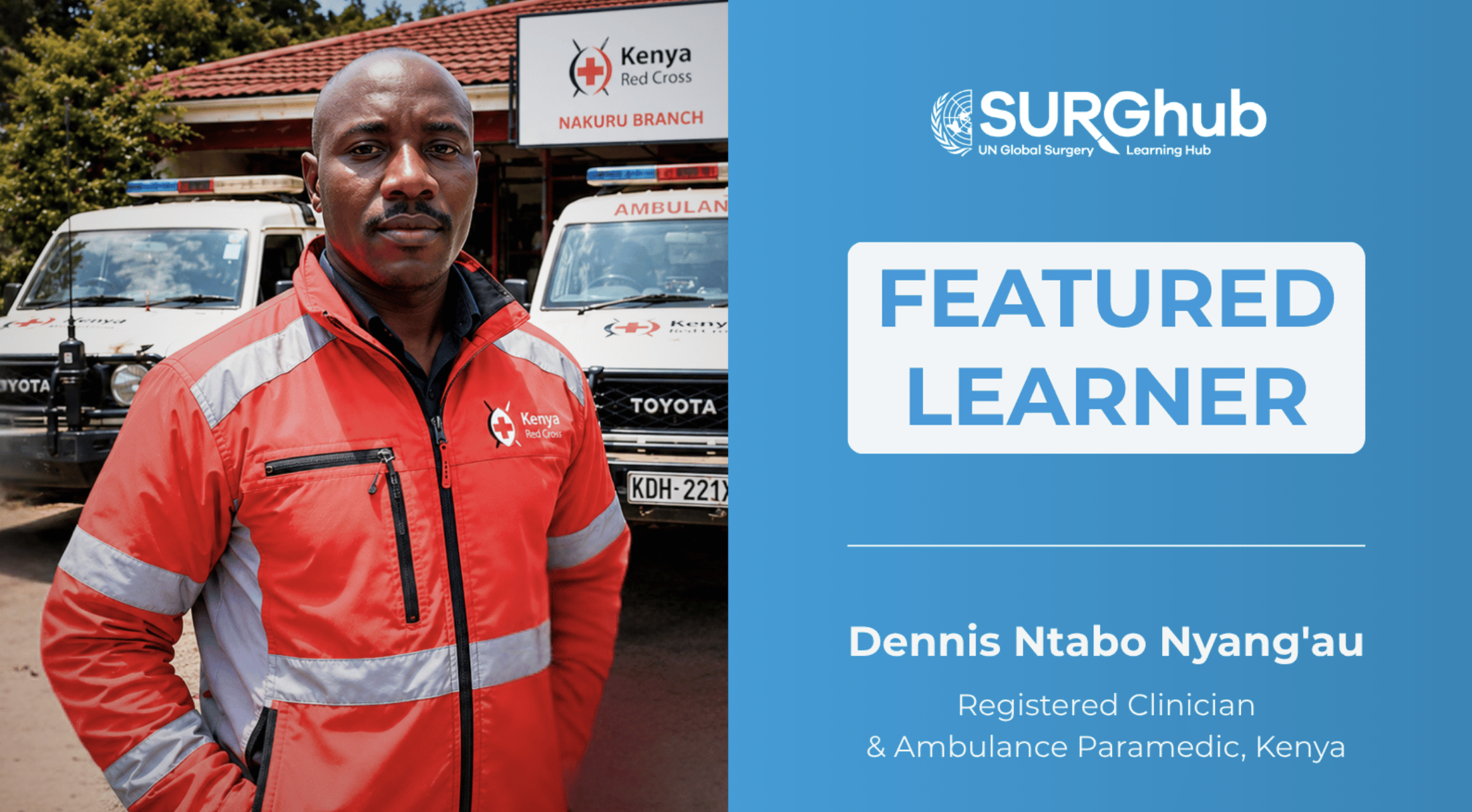
From the frontlines of emergency care in Nakuru, Mr Dennis Ntabo Nyang'au shares how systematic clinical training provides a vital framework for saving lives in Kenya’s most unpredictable environments. Read article.