The Invisible Work That Keeps Surgery Safe in Kano, Nigeria
In the latest instalment of Voices of Global Surgery, Ibrahim Isah Muhammad, perioperative nurse and operating theatre in-charge at Wudil General Hospital in Kano State, Nigeria, reflects on the realisation that saving lives in surgery often begins long before the first incision.
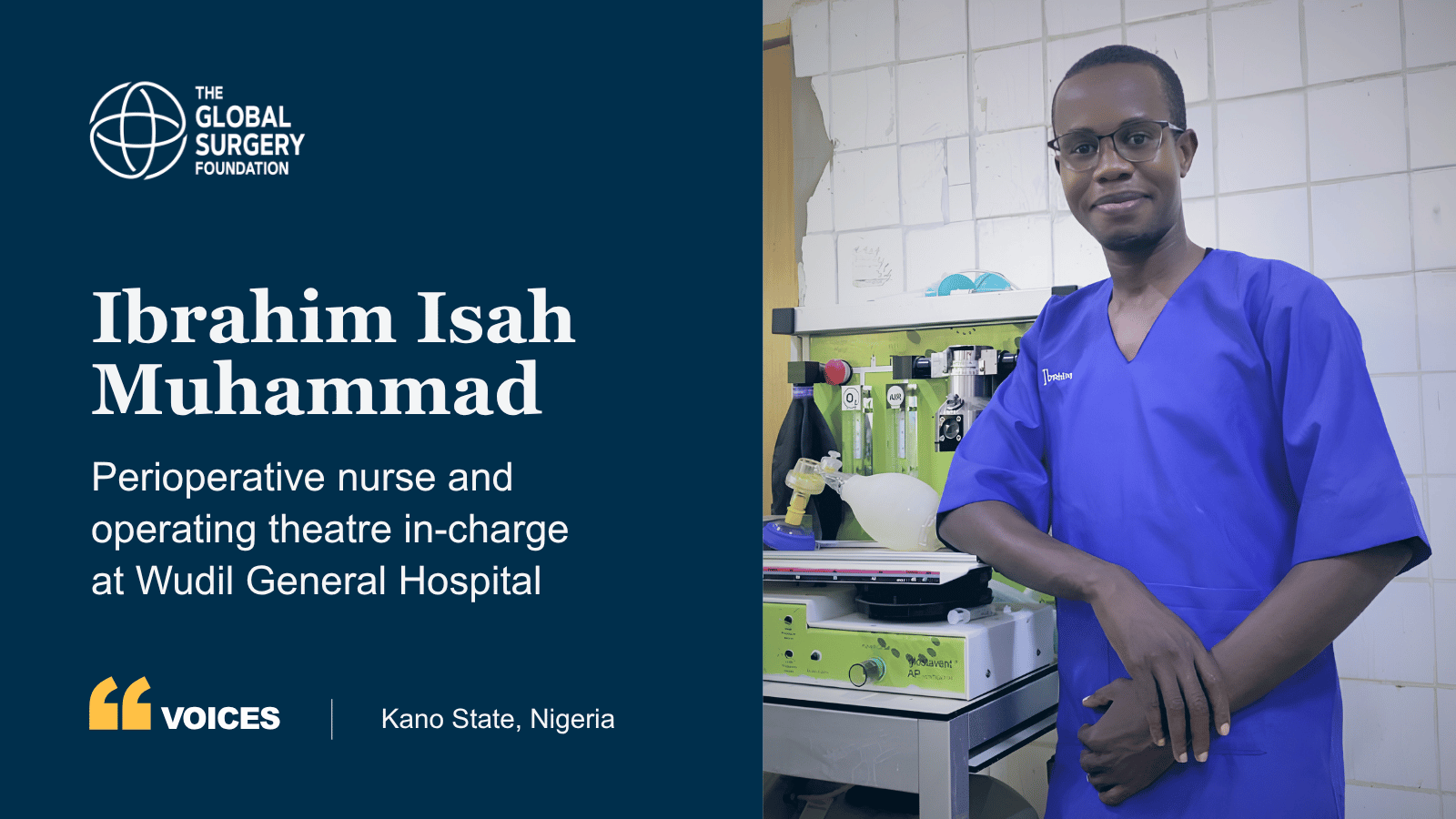
Health workers around the world see where surgical care falls short. In Voices of Global Surgery we highlight their stories.
Wudil, Nigeria — Most patients never see the work that shapes their operation: the equipment checked before the first case, the sterile field guarded, the supplies laid out in advance, the counts done and done again. For Ibrahim Isah Muhammad, that invisible work is what surgical care is. “I combine hands-on perioperative care with leadership of the operating theatre to deliver consistent, high-quality surgical outcomes,” he says. “Patients deserve excellence at every stage.”
At Wudil General Hospital, in a market town on the Kano River about 40 kilometres south-east of the state capital, his days begin before the first patient enters the theatre. As both perioperative nurse and theatre in-charge, he balances clinical work with leadership, keeping surgeries moving safely and without unnecessary delay. “It’s not just assisting,” he explains. “A lot of my day is spent thinking ahead and managing the unexpected.”
The Infections That Sent Him Upstream
Ibrahim did not set out to work in the operating theatre. It began, in fact, with frustration. As a ward nurse caring for post-operative patients, he kept seeing surgical site infections in patients who were receiving careful attention on the wards. “I found it uncomfortable that most post-op patients ended up with surgical site infections despite efforts post-operatively,” he recalls. He was seeing one of the most stubborn problems in global surgery up close: the World Health Organization estimates that in Africa up to one in five women who give birth by caesarean section develops a wound infection, far more than in wealthier regions, compromising a mother’s health and her ability to care for her newborn. The question of where those infections began would not leave him, so he followed it upstream, into the theatre itself.
“Every action in the theatre directly affects a patient’s outcome.”
“That was the moment,” he says. “I got the feeling that being here was my calling, because every action in the theatre directly affects a patient’s outcome.” Years later, that belief still sets his standards: every instrument prepared correctly, every sterile field maintained, every checklist completed.
One Emergency Can Alter the Day
On paper his role sounds orderly; in practice it rarely is. As theatre in-charge he coordinates staff, manages resources, oversees the day’s list and troubleshoots whatever goes wrong, all while supporting the operations under way. One emergency can reorder the entire schedule, a missing supply or a faulty machine can become a crisis, and a delayed procedure affects every patient booked after it. “One of the challenges for me is balancing hands-on clinical responsibilities with leadership duties,” he says.
“Even small actions can significantly affect patient outcomes.”
He is candid about the strain. “One of the challenges for me is balancing hands-on clinical responsibilities with leadership duties,” he says. What steadies him is the patient in front of him, and the knowledge that his work contributes to a safe outcome.
Counted, Checked, Confirmed
The most important lesson of his career is not a technical skill, he says, but teamwork. “Even small actions can significantly affect patient outcomes,” he says, “especially in the operating theatre, where coordination and quick decision-making are critical.” The lesson was tested during an emergency operation in December 2025, when a patient’s condition deteriorated suddenly on the table and the surgeon, anaesthetists, scrub team and nurses all had to respond at once. The patient survived. “What stayed with me was how every team member’s role became critical in that moment,” he says. “Clear communication and preparation helped us achieve a safe outcome.” The Kano project has made that kind of coordination its business: it translates global recommendations into local, practical action by training whole surgical teams together, hands-on, in technical skills and in the non-technical ones, communication, briefings, speaking up, that build a culture of patient safety across the entire continuum of care.
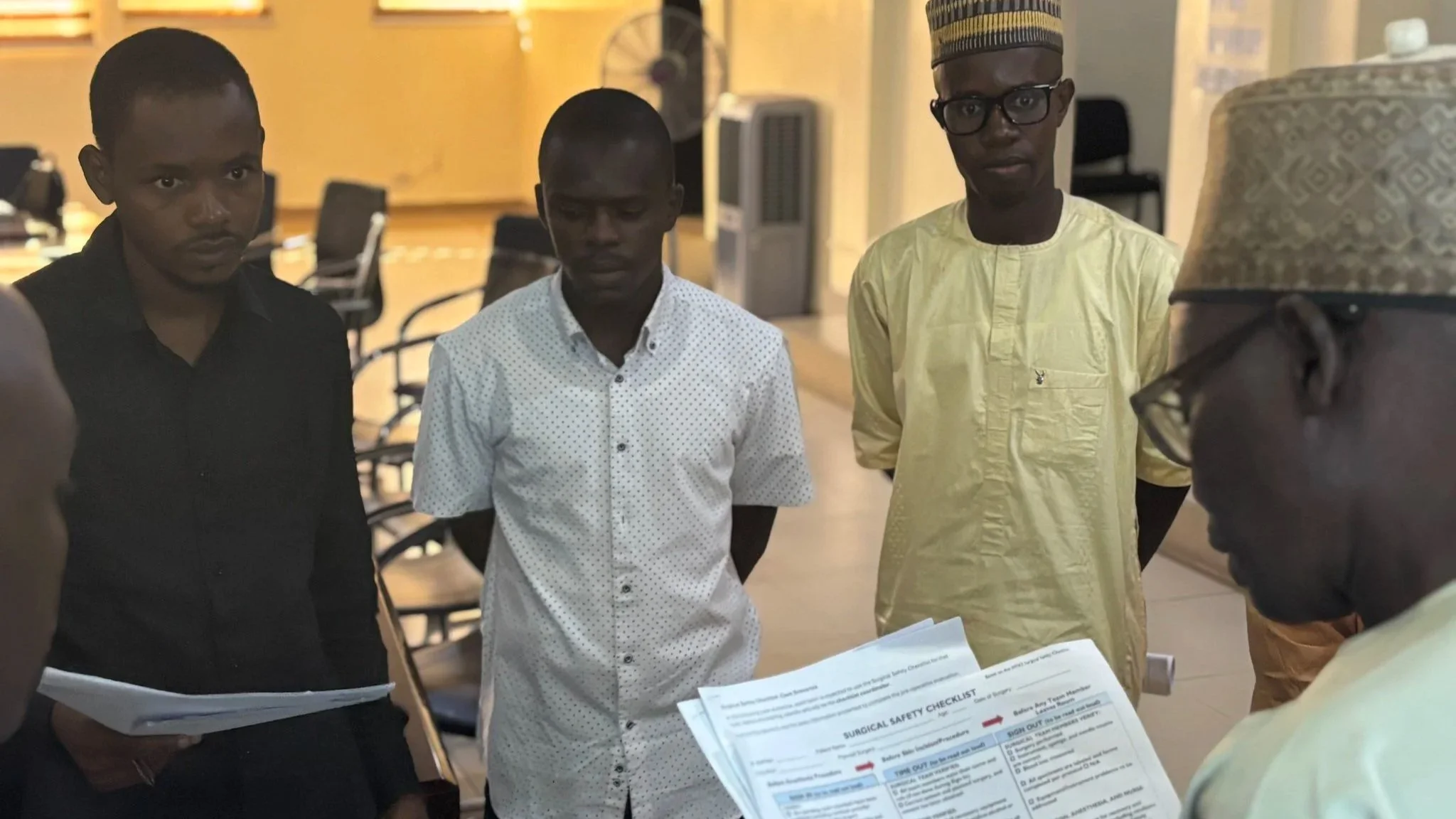
Surgical team members review the CS-adapted Surgical Safety Checklist during training for the Making Caesarean Section (CS) Safe in Kano project.
What Support Makes Possible
Wudil General Hospital is one of ten facilities in the Making Caesarean Section (CS) Safe in Kano project, which together see more than 27,000 births each year. Launched in March 2025, the project began by bringing surgical teams from all ten facilities together for three days of joint training and continues through mentors working alongside each team at its own facility.
Its curriculum reads like a map of Ibrahim’s own preoccupations: the CS-adapted Surgical Safety Checklist, team briefs and safety huddles, and the prevention of surgical site infections, the very problem that first sent him from the ward into the theatre. The project aims to increase correct use of the checklist to at least 90% of caesarean sections; on the whiteboard in Wudil’s theatre, the counting has already begun. The challenges have not gone away: high patient volumes, emergency cases, limited resources and staffing pressures remain daily realities. His hope is straightforward: that health workers receive the support, training and resources they need to give their best care.
“When healthcare workers are supported with the right tools, updated knowledge, and environment, patient outcomes improve significantly.”
“When healthcare workers are supported with the right tools, updated knowledge, and environment, patient outcomes improve significantly,” he says. Patients may never see the countless actions taken before an operation begins. Ibrahim sees them every day, and in those details, in preparation, teamwork and constant vigilance, lives are changed.
Voices of Global Surgery
Meaningful progress requires listening to those who know it best: the people with lived experience. Their unique expertise is irreplaceable when it comes to understanding and fixing the gaps in quality surgical care. In this series, we highlight the voices of those most affected to explore the critical barriers, challenges, and opportunities in achieving safe surgical care for all.
About the Project
The Making Caesarean Section (CS) Safe in Kano project is a targeted intervention to improve maternal and perinatal outcomes through safe, timely, appropriate, and respectful CS care for over 27,000 women giving birth each year in Kano, Nigeria. The project adapts a hub-and-spoke mentorship model across ten facilities in Kano State to build the capacity of interdisciplinary surgical teams, including training on the CS-adapted Surgical Safety Checklist, evidence-based surgical techniques, teamwork and communication, and a culture of patient safety. It is implemented by ACEPHAP at Bayero University with the support and coordination of the Global Surgery Foundation (GSF), in collaboration with the Kano State Ministry of Health.
globalsurgeryfoundation.org/safe-cs-kano
About the Funding & Implementation
The Kano CS project is supported by SURGfund, the pooled financing mechanism of the Global Surgery Foundation (GSF) and the world’s only catalytic fund for strengthening surgical care systems. This project receives additional support from the Republic and Canton of Geneva, Switzerland. In addition to SURGfund financing, GSF provides strategic implementation support to ensure long-term sustainability.
Your Next Article
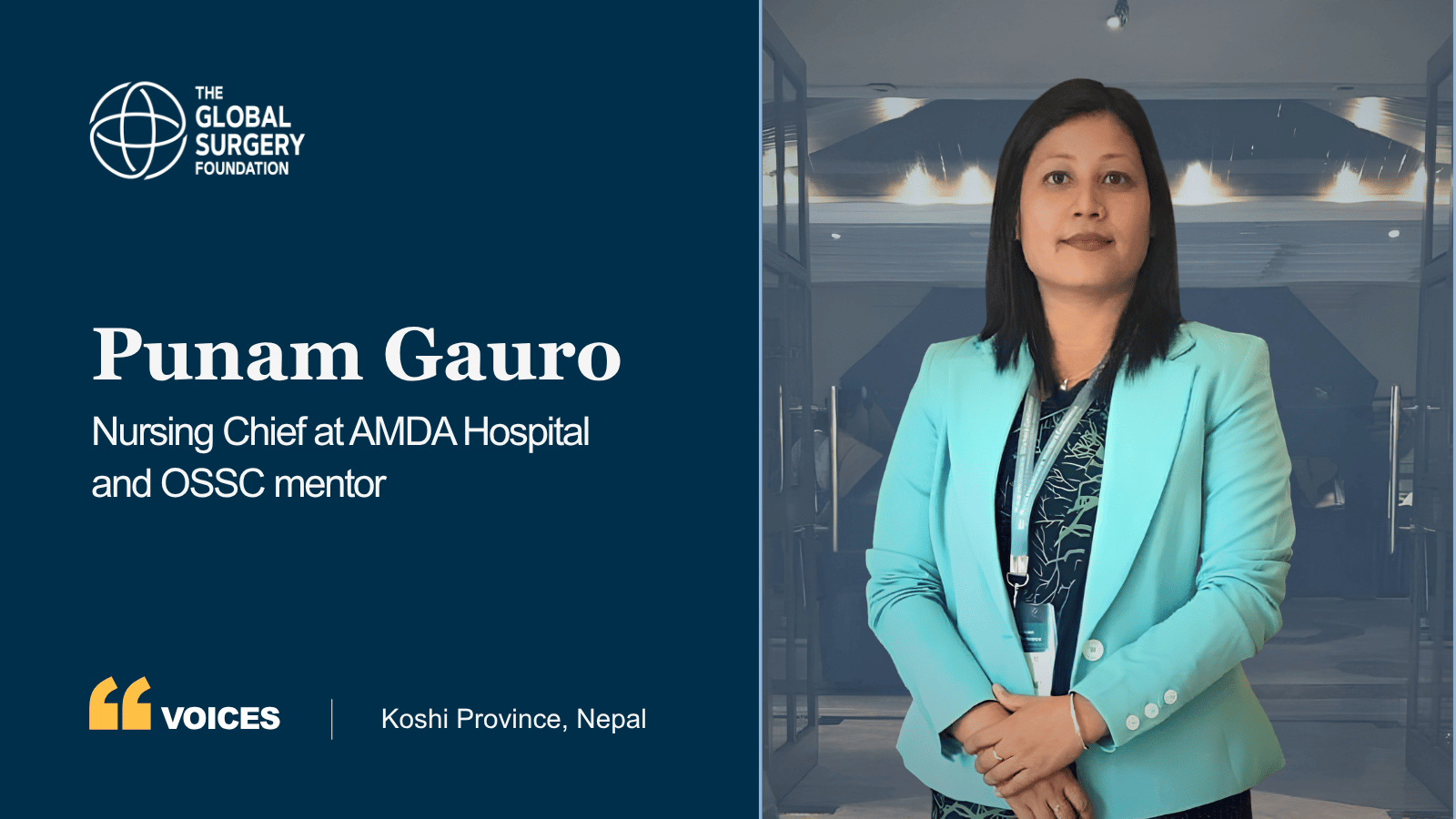
Punam Gauro, Nursing Chief at AMDA Hospital in Damak, Nepal, and a mentor in the Nepal OSSC project, describes a career spent turning training into impact for mothers and newborns, and remembers the mother whose recovery still shapes every lesson she gives. Read article.