Not Built by One Person Alone: Dr. Abdihakim Mohamoud Ahmed on Training Between Shifts
A junior doctor at a district hospital in Somaliland, Dr. Abdihakim Mohamoud Ahmed shares how he redirected his free time towards surgical training, and why he believes the future of surgical care belongs to a generation rather than to any one person.
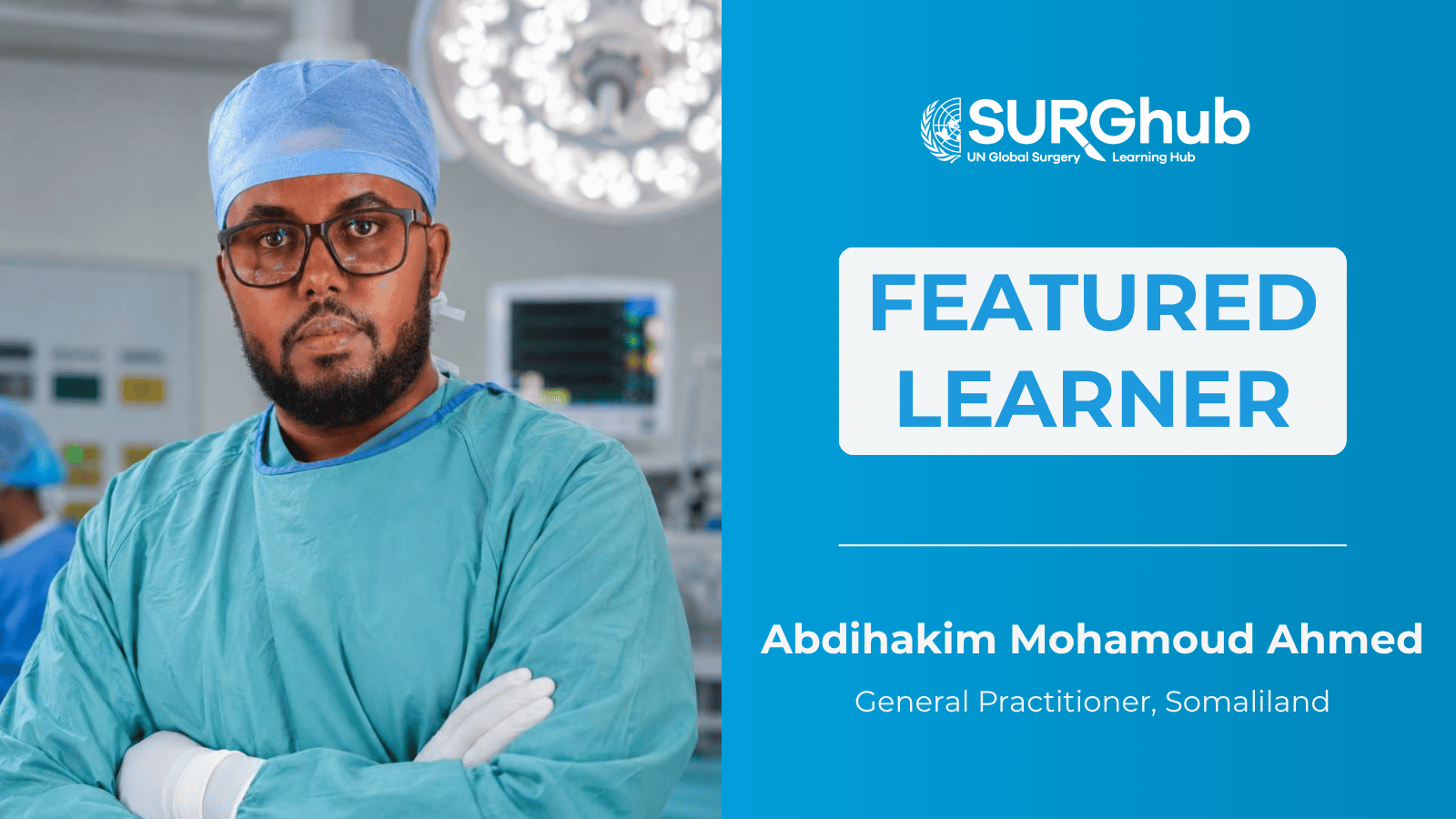
Surgical professionals around the world use SURGhub to improve patient outcomes. In this series we highlight their stories.
Dr. Abdihakim Mohamoud Ahmed is a junior doctor from Burao, working at Sheikh District Hospital. His week is organised less around a specialty than around wherever the hospital needs him. Saturdays and Sundays are outpatient days, seeing walk-in patients and managing a wide range of acute and chronic presentations. Tuesdays and Wednesdays are long shifts on the wards, from eight in the morning until late in the evening, covering rounds, patient monitoring, admissions and coordination with nursing staff. Alternating Friday shifts keep care continuous across the week.
Hands-on mentorship laid the foundation for that work. Early in his training, Dr. Abdirahman Adam shaped his surgical capacity from the ground up, starting with the basics: how to don a surgical gown properly, how to tie a knot correctly. From there came exposure to the operating theatre, and with it the discipline and precision that surgical practice demands.
“Experienced surgical hands are scarce, and much of the burden falls on general practitioners and junior staff”
Practising in a low-resource context brings distinct challenges. “Experienced surgical hands are scarce, and much of the burden falls on general practitioners and junior staff working alongside the few specialists available,” he says. Essential surgical services continue regardless, with Dr. Abdihakim and his colleagues stretching limited resources to meet urgent patient needs.
What sustains him through the hardest shifts is a combination of human connection and personal conviction. A patient recovering, a patient smiling again, a heartfelt thank you: these offer immediate encouragement. Beneath them sits his faith. “My faith grounds this work in something larger than myself,” he says, describing a belief that easing another person's suffering is never only for the benefit of that person. It is a conviction that turns an exhausting shift into something meaningful.
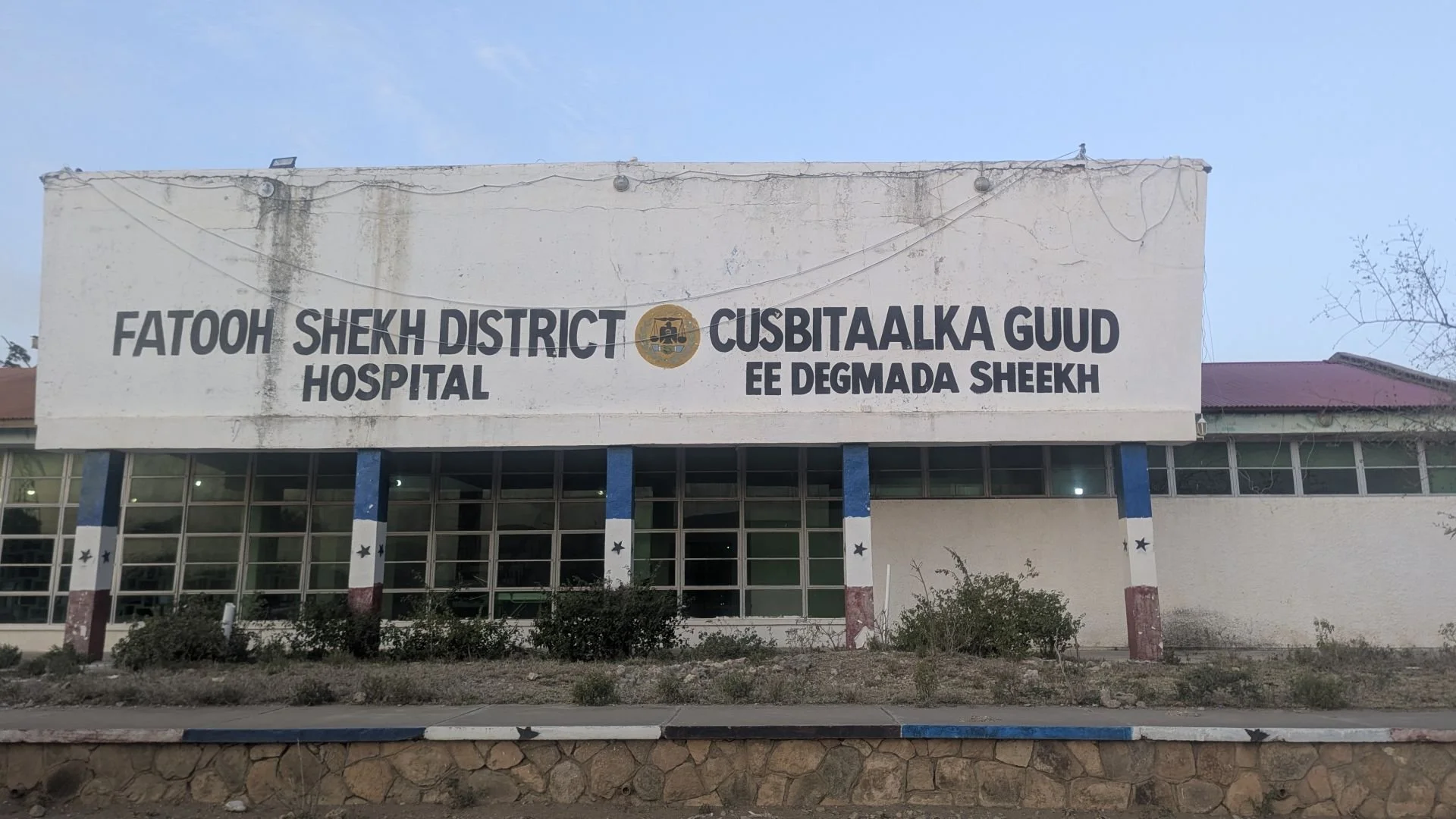
Dr. Abdihakim works across the outpatient department and the wards at Sheikh District Hospital, where general practitioners and junior doctors carry much of the clinical load alongside a small number of specialists.
“I made a deliberate decision to redirect the time I previously spent on social media toward SURGhub instead”
Dr. Abdihakim came across SURGhub on LinkedIn and began with a course on obstetric trauma, which proved directly relevant to the cases he was already seeing. After completing that first certificate, he reconsidered how he used his time outside clinical duties. “I made a deliberate decision to redirect the time I previously spent on social media toward SURGhub instead,” he says, using those hours to build new skills and connect with others working in the field.
The training now fits into whatever gaps open up between shifts, treated as a standing commitment rather than something he returns to occasionally. He describes its impact as cumulative, built up steadily rather than arriving all at once. Progress in global surgery is not always marked by a single dramatic case. More often it is made quietly, through small refinements in technique, safety and decision-making.
“The future of surgical care in resource-limited settings will not be built by one person alone”
His hope for the future is specific: affordable, accessible surgical services delivered by skilled hands, so that no patient is turned away because of cost or distance. He does not see that work as belonging to any one individual. “The future of surgical care in resource-limited settings will not be built by one person alone, but by a generation of committed young professionals willing to show up, learn relentlessly, and serve with both skill and heart,” he says.
To young professionals entering resource-limited healthcare settings, he offers a Somali proverb: “Wixii rag u kaco, Rabbina aqbalo, way rumoobaan.” Whatever people sincerely strive for, if accepted by Allah, will come to pass. Dedication rooted in genuine purpose, he says, is never wasted, even when the path is difficult.
Abdihakim's Top Course
Obstetric Trauma
Topic: Obstetrics & Gynaecology, Trauma Surgery, Emergency Medicine
Description: Learn about the physiology of pregnancy and management of trauma in pregnant patients.
"I made a deliberate decision to redirect the time I previously spent on social media toward SURGhub instead."
– Dr. Abdihakim Mohamoud Ahmed

About this Story
This profile is part of our Impact Stories series, highlighting how SURGhub learners are applying global surgical standards to local challenges. Our mission is to ensure that high-quality surgical education is a bridge—not a barrier—to saving lives worldwide.
The views and opinions expressed in this article are those of the interviewee and do not necessarily reflect the official policy, position, or standpoint of SURGhub or its partner organisations.
About SURGhub
The United Nations Global Surgery Learning Hub (SURGhub) is the premier training platform in global surgical care. A joint initiative of the Global Surgery Foundation (GSF) and the United Nations Institute for Training and Research (UNITAR), supported by the Royal College of Surgeons in Ireland (RCSI) and implemented in association with the Johnson & Johnson Foundation, SURGhub provides seamless access to quality-assured online courses for frontline surgical care workers in resource-limited settings worldwide. With tens of thousands of learners across over 200 countries and territories, SURGhub is transforming access to lifesaving surgical education.
Your Next Article
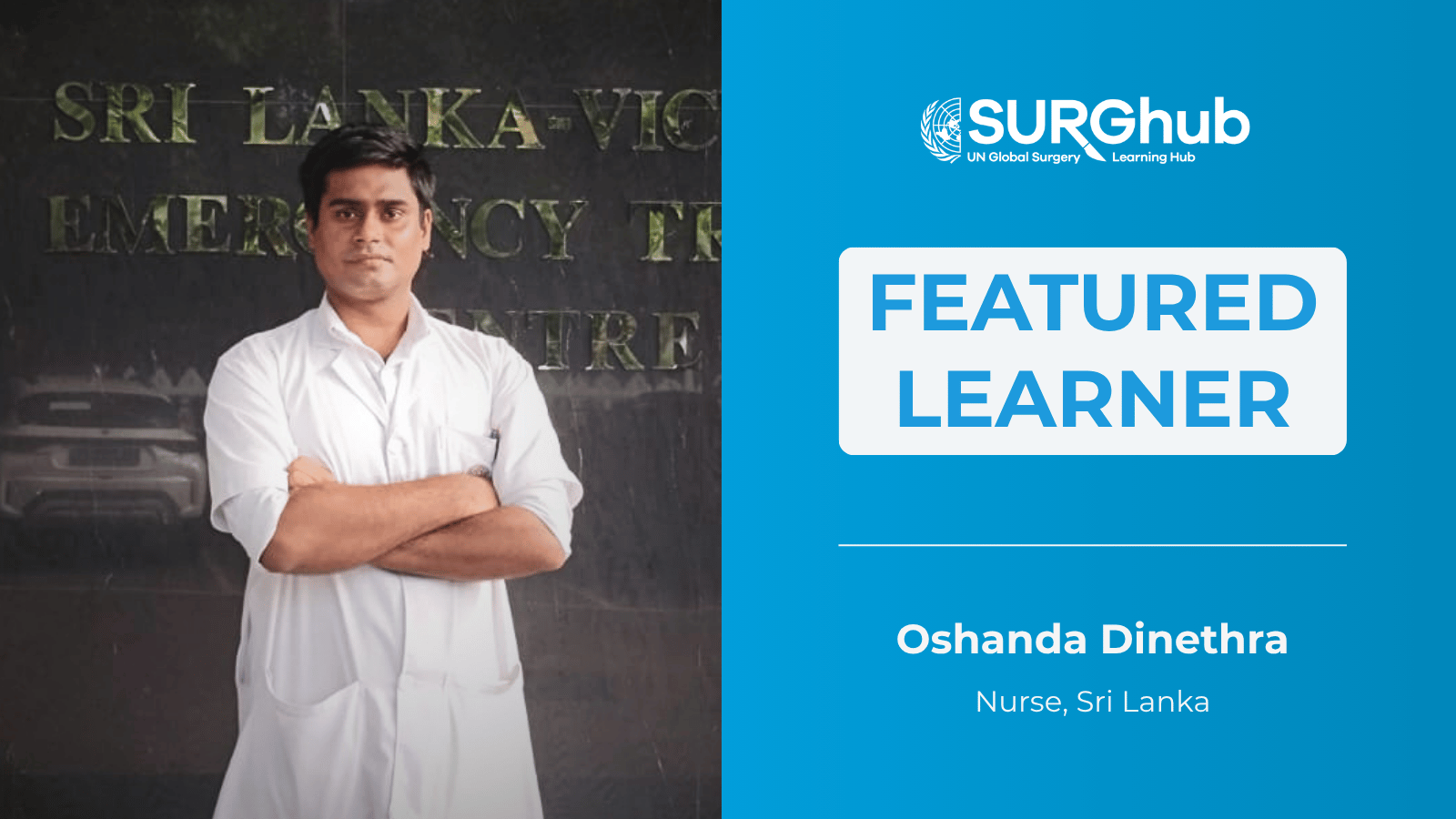
A recent nursing graduate from Sri Lanka, Mr Oshanda Dinethra, shares how flexible online learning supported him through a critical ICU case, and why he believes nursing depends on knowledge and practical skill working together. Read article.