
On Sunday 15 November, people around the world remember those killed and injured on the roads. For the millions injured each year, the care they receive in the first minutes and hours after a crash can decide whether they survive and how well they recover.
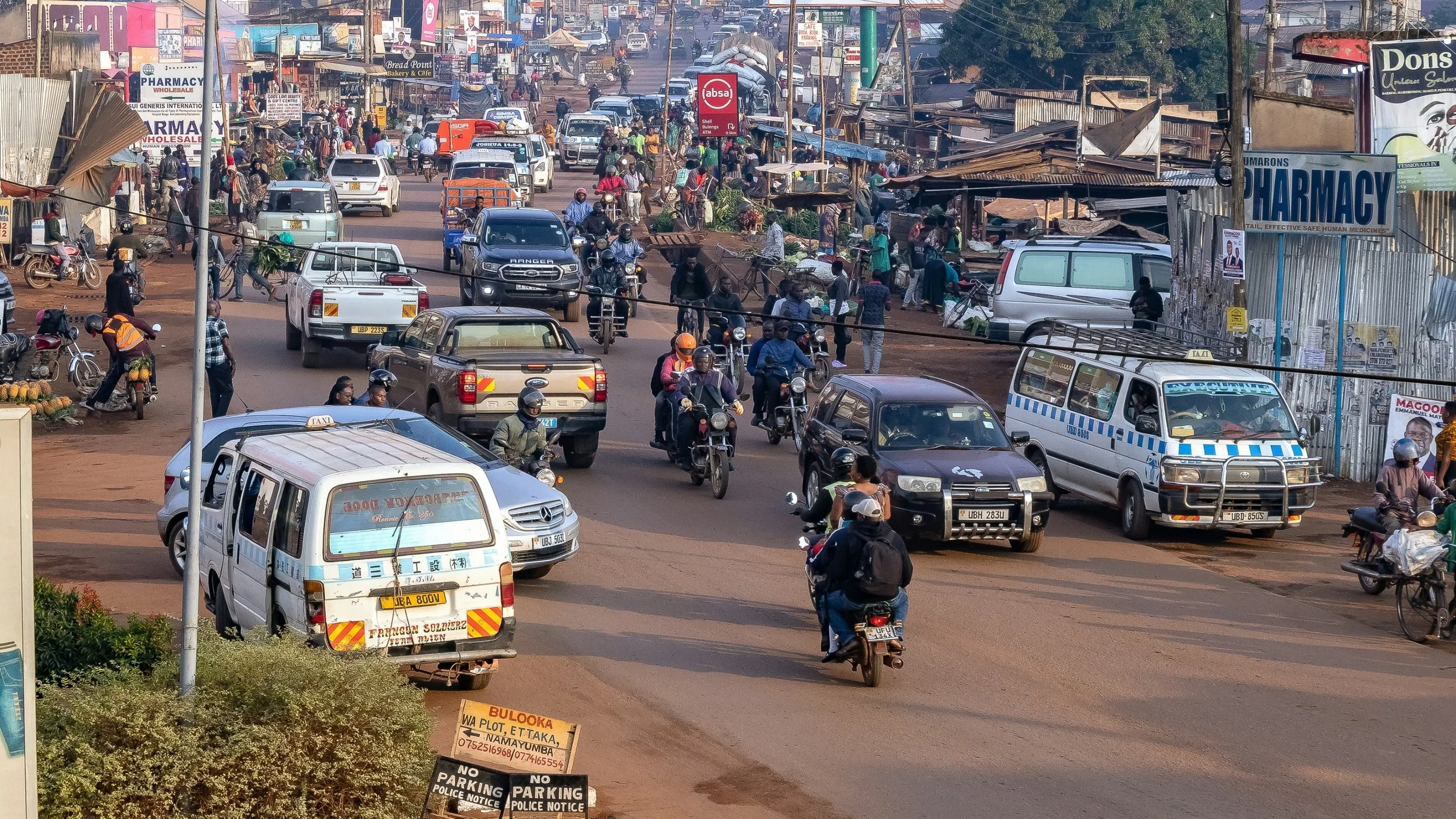
Cars, motorbikes and people on foot share a busy town street. Photo: Ssenyondo Gabriel / Unsplash
What the day marks
The World Day of Remembrance for Road Traffic Victims is held on the third Sunday of November every year. It remembers everyone killed or seriously injured on the roads and acknowledges the work of the emergency services who respond to crashes.
The day began in the 1990s among organisations in Europe that support road traffic victims and their families. In 2005, the United Nations General Assembly invited Member States and the international community to recognise it as an acknowledgement of victims of road traffic crashes and their families. The World Health Organization (WHO) and the United Nations Road Safety Collaboration encourage everyone working on road safety to mark the day.
Why it exists
Road traffic crashes killed 1.16 million people in 2025, according to WHO. Between 20 and 50 million more people are injured every year, many of them with a lasting disability, and road traffic injuries are the leading cause of death for children and young people aged 5 to 29.
WHO also reports that 92% of road deaths occur in low- and middle-income countries, although these countries have around 60% of the world’s vehicles. More than half of the people who die on the roads are pedestrians, cyclists, and motorcyclists rather than people travelling in cars.
At the same time, the global rate of road traffic deaths fell by 21% between 2011 and 2025, even as more than one billion motor vehicles were added to the world’s roads. In July 2026, the UN General Assembly adopted a declaration that renews the commitment to halve road deaths and serious injuries by 2030, compared with 2021 levels.
The 2026 focus
The day does not have a separate theme each year. As in recent years, the 2026 observance runs under the message “Remember. Support. Act.”: remember those killed and seriously injured, call for better support for victims and their families, and promote evidence-based action to prevent further deaths and injuries.
Why it matters for surgery
The Global Plan for the Decade of Action for Road Safety 2021–2030 makes care after a crash one of its five areas for action. It notes that this care is extremely time-sensitive, and that delays of minutes can make the difference between life and death.
The plan asks countries to make surgical and intensive care, with the staff and equipment they need, available 24 hours a day, whatever a patient’s ability to pay. It also asks them to provide rehabilitation, which can greatly reduce lifelong disability among people injured in road crashes.
Care before hospital
The Global Plan also recommends basic emergency care training for people outside the health system, such as taxi and public transport drivers, police officers, and firefighters.
On SURGhub, the course Hemorrhage Control in the Prehospital Setting from CrashSavers prepares first responders in resource-limited settings to control severe bleeding before a patient reaches hospital.
About this Article
This article links to material published by third parties and summarises it as stated in the source. It is provided for information only, is not clinical guidance, and does not imply endorsement by the Global Surgery Foundation or its project partners. Readers should consult the primary source before acting on the material, which is not routinely updated.
About the Global Surgery Foundation
The Global Surgery Foundation (GSF) is the lead global platform for surgical care systems strengthening. Operating on a UN-incubated, neutral platform, GSF mobilises world-class clinical, policy, and funding expertise to support local leaders in building surgical systems that are efficient, resilient, and sustainable. Through SURGfund — the world's first and only pooled financing mechanism for surgical care — and SURGhub — the UN Global Surgery Learning Hub — GSF is translating catalytic investment into measurable, lifesaving impact across low- and middle-income countries.
Your Next Article
For Breast Cancer Awareness Month, Professor Freddy Gnangnon explains why women in sub-Saharan Africa need surgical teams trained to perform breast cancer surgery safely. Read article.