Non-communicable diseases receive just 2.5% of health aid
A global analysis of two decades of health aid found that non-communicable diseases received a fraction of funding despite causing most of the disease burden.
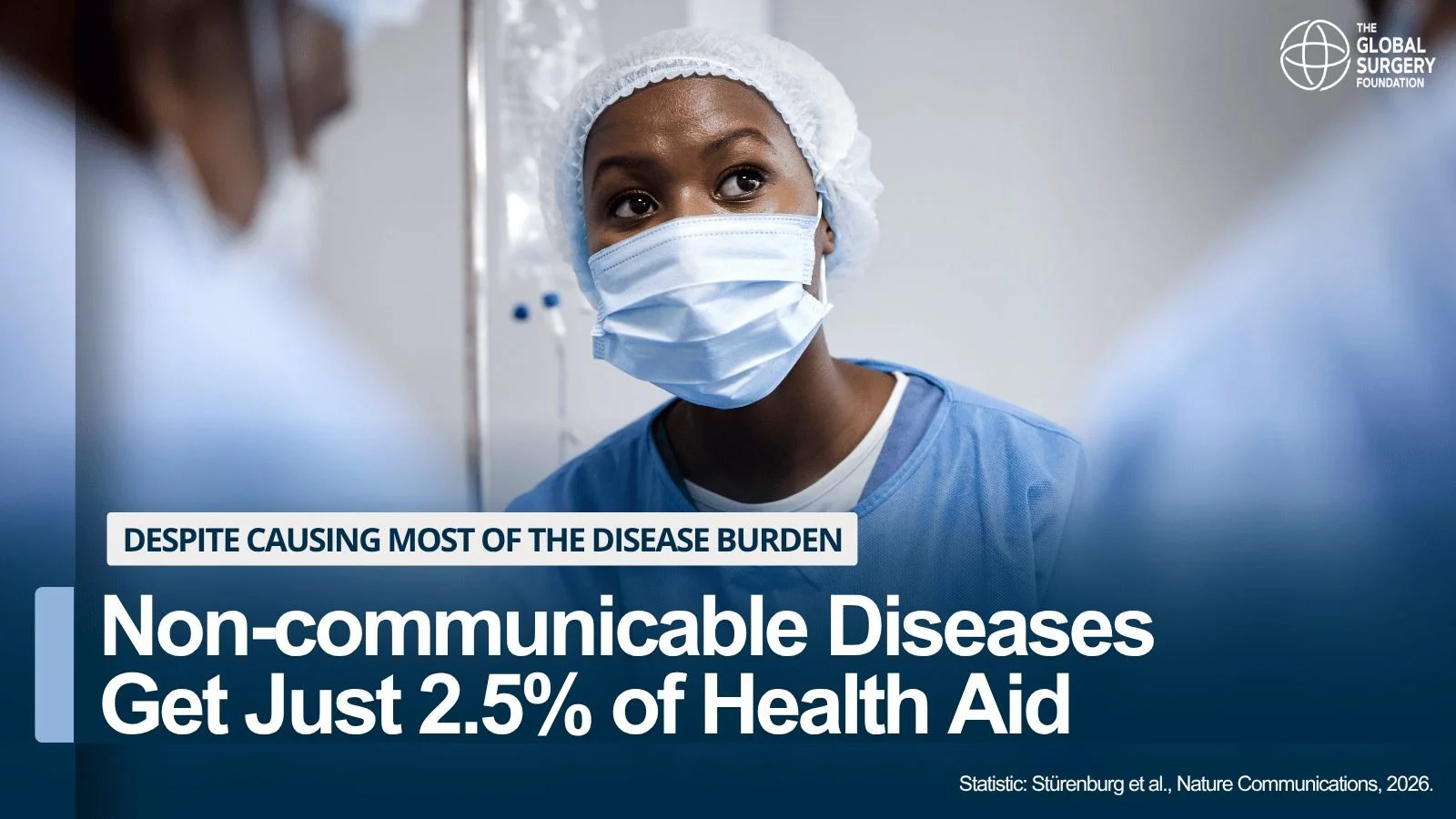
Non-communicable diseases received the smallest share of health aid over the two decades studied, despite surgical care being required to treat most of them.
A study tracking two decades of global health funding was published in Nature Communications on 18 August 2026 by researchers led by Stefan Feuerriegel at LMU Munich. The analysis used a large language model to classify 3.7 million development aid projects from 2000 to 2022, worth approximately USD 332 billion, by disease category.
Non-communicable diseases received 2.5% of health aid despite 59.5% of burden
Non-communicable diseases (NCDs) accounted for 59.5% of global disability-adjusted life years (DALYs) from 2000 to 2021 but received only 2.5% of the USD 332 billion in health-related official development assistance (ODA) that the study classified between 2000 and 2022. Communicable, maternal, neonatal and nutritional diseases (CMNNDs) received the remaining 97.5%, equivalent to USD 323.7 billion.
HIV/AIDS and STIs received 34% of aid, just 6% of burden
HIV/AIDS and sexually transmitted infections (STIs) accounted for 6% of global disease burden but received 34% of total health aid, equivalent to USD 112.4 billion between 2000 and 2022, the study found. Cardiovascular disease accounted for 17% of burden but received less than 1% of aid, equivalent to USD 0.6 billion over the same period, as did neoplasms, at 10% of burden, and diabetes and kidney disease, at 5.4% of burden.
Central African Republic ranked 90th percentile for burden, 52nd for aid
The study identified aid-burden misalignment, defined as a country's disease-burden rank exceeding its per capita aid rank within its income group, across several regions, including Central Africa, West Africa and parts of South Asia. In the Central African Republic, disease burden from HIV/AIDS and STIs ranked at the 90th percentile among least developed countries, while per capita aid for the same category ranked at the 52nd percentile, the study reported.
For surgical teams, the findings point to a funding shortfall for conditions such as cardiovascular disease, cancer and diabetes, for which surgical care is required to treat most cases.
About this Article
This article links to material published by third parties and summarises it as stated in the source. It is provided for information only, is not clinical guidance, and does not imply endorsement by the Global Surgery Foundation or its project partners. Readers should consult the primary source before acting on the material, which is not routinely updated.
About the Global Surgery Foundation
The Global Surgery Foundation (GSF) is the lead global platform for surgical care systems strengthening. Operating on a UN-incubated, neutral platform, GSF mobilises world-class clinical, policy, and funding expertise to support local leaders in building surgical systems that are efficient, resilient, and sustainable. Through SURGfund — the world's first and only pooled financing mechanism for surgical care — and SURGhub — the UN Global Surgery Learning Hub — GSF is translating catalytic investment into measurable, lifesaving impact across low- and middle-income countries.
www.globalsurgeryfoundation.org
Your Next Article
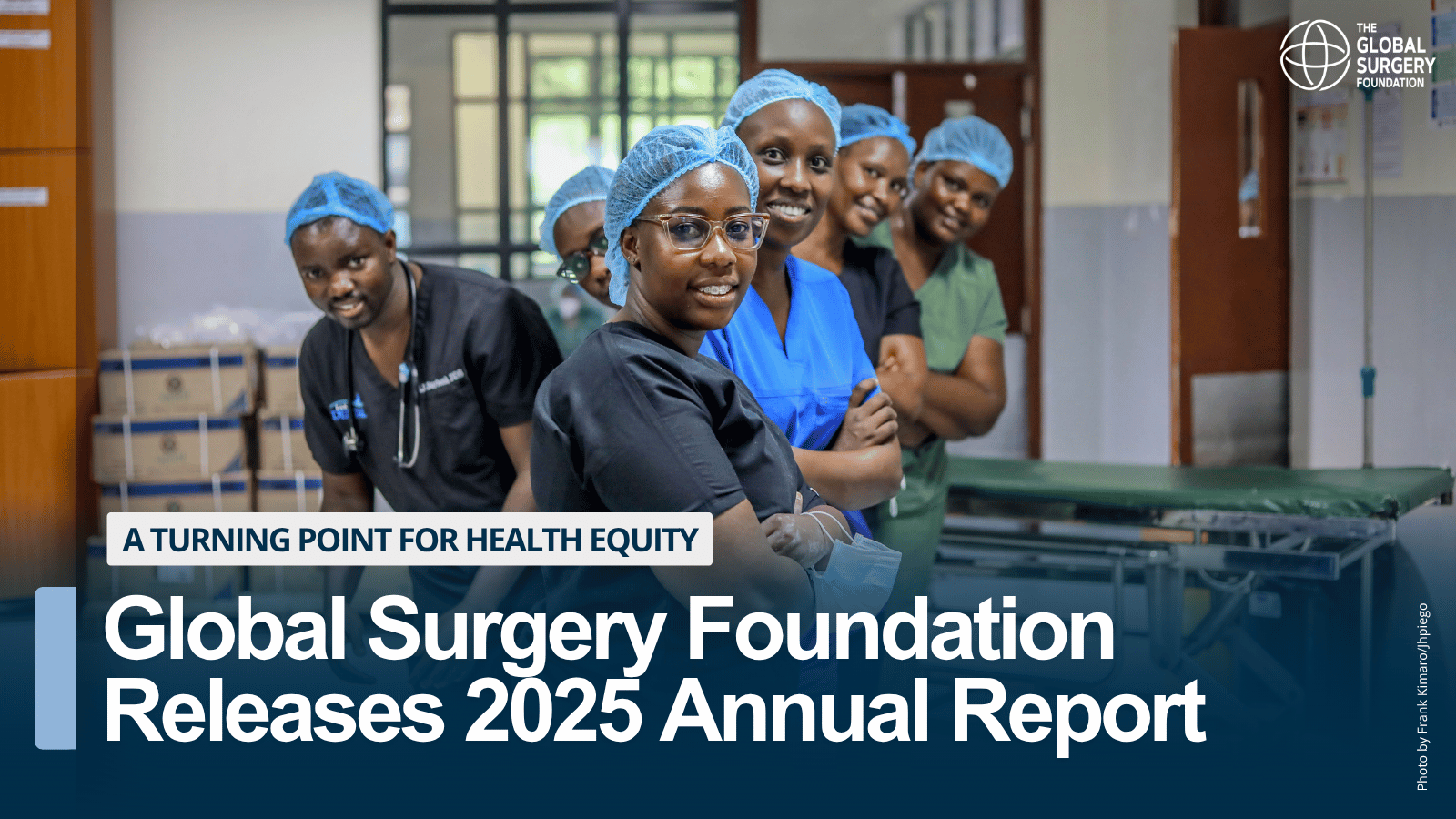
The Global Surgery Foundation’s 2025 Annual Report marks a decisive turning point for global health. Read more